
21: 05: 2026
Discovering the Sensuous Secrets of Strawberries in the Nation’s Lush Agricultural Tapestry

By Mekonnen Solomon
In the verdant highlands of Ethiopia, where volcanic soils and temperate climates conspire to produce agricultural bounty of exceptional quality, a quiet revolution unfolds under the crimson canopy of strawberry fields. Dubbed “Red Gold” and complemented by its “Blue Gold” counterpart in blueberries, this high-value crop has emerged as one of the most efficient generators of foreign exchange in the nation’s fruit export portfolio. Yet, despite its proven economic prowess, nutritional superiority, and alignment with global market demands for
premium, sustainable produce, strawberries occupy a perplexing position: celebrated in commercial circles but conspicuously absent from the pantheon of national flagship agricultural programs.This article challenges that administrative and operational oversight. With over two decades of professional immersion in Ethiopia’s horticultural export sector, the analysis herein draws upon empirical trade data, comparative benchmarks, and strategic foresight to interrogate why a crop delivering outsized returns on minimal land has not been elevated alongside staples such as wheat, avocado, and enset. In an era where Ethiopia seeks to bolster foreign reserves, enhance nutritional security, and drive inclusive rural development amid resource constraints, the exclusion of strawberries represents not merely an anomaly but a missed multiplier of transformative potential. The case for prioritization is compelling, data-driven, and urgent.
The arithmetic of agricultural value creation in Ethiopia reveals a striking disparity. According to expert insights and trade records, approximately 521 hectares under commercial strawberry cultivation have generated around 25 million USD in export revenues over the past five years. In stark contrast, the national avocado program, spanning roughly 31,000 hectares, has yielded only about 7.41 million USD in the same period.
This efficiency is no aberration. Historical data from 2013–2017 illustrates strawberries’ elite performance: while accounting for just 3.8% of Ethiopia’s fruit export volume (approximately 7,454 tons out of 202,130 tons total), they contributed nearly 30% of fruit export revenues (USD 25.15 million). The unit value, approximately USD 3,375 per ton , dwarfed bananas (USD 248/ton), avocados (USD 405/ton), and the overall fruit average (USD 438/ton), delivering 7–8 times higher returns per unit volume.
Recent figures reinforce this trajectory. In 2022, fresh strawberry exports exceeded 1.7 million kg, valued at approximately USD 5.34 million, predominantly to high-paying Gulf markets. In 2023, Ethiopia’s “Other fresh fruit” category, overwhelmingly strawberries, contributed the bulk of USD 5.08 million. These exports underscore a high value-to-volume ratio that optimizes airfreight logistics, mitigates bulk commodity risks, and maximizes foreign exchange under constrained capacity.
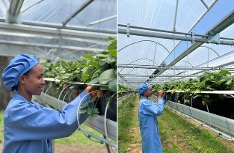
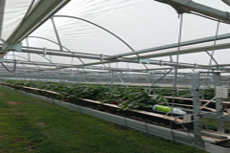
Photo-1 Captivating Harvest: A Glimpse into the Strawberry Fields
By comparison, avocado production, while voluminous, commands lower unit values and faces stiffer competition in saturated markets. The government’s 15-year National Avocado Development Program targets significant expansion, reflecting a strategic bet on volume and domestic processing potential. Yet the per-hectare forex generation of strawberries, often exceeding that of avocados by orders of magnitude — invites rigorous scrutiny of prioritization metrics. Does policy favor sheer scale and traditional staples over marginal efficiency and export intensity? In a resource-scarce economy, such calculus merits transparent revaluation.
Beyond economics, strawberries excel in addressing Ethiopia’s dual burdens of malnutrition and rising non-communicable diseases, including diabetes. Comparative nutritional profiles are illuminating. Strawberries deliver 568% more Vitamin C than avocados per equivalent serving, bolstering immune function and skin health. They offer lower sugar content, dramatically reduced saturated fat (140.7 times less), and a lighter caloric density (32 calories per 100 grams versus avocados’ higher load). While avocados provide substantial fiber and healthy fats, strawberries balance this with potent antioxidants like anthocyanins, supporting cardiovascular health and inflammation reduction.
A modest 1/8-acre plot can yield 30–50 kg weekly after just 90 days, with a productive lifespan of up to 2-3years. This rapid cycle supports stable income and direct nutritional access for smallholder households. In a nation where diabetes prevalence is climbing, integrating strawberries into public health and school feeding initiatives could yield profound dividends. Their exclusion from flagship programs — which allocate substantial budgets for extension, inputs, and infrastructure — limits these synergies, despite strawberries’ superior alignment with both export earnings and domestic nutritional security.
Ethiopia’s highlands, exemplified by clusters such as Holeta and Ejera, provide ideal conditions: cool nights, moderate days, abundant sunshine, and altitude that enhance flavor, Brix levels (often exceeding 8), and visual appeal. Nearly 90% of commercial strawberry farms originated from former rose flower operations, leveraging existing expertise in protected cultivation, post-harvest handling, and export logistics.
Innovations further amplify this edge. The Phytophthora outbreak at Zequala Horti PLC, which devastated 5.2 hectares and approximately 390,000 plants, catalysed a pioneering partnership with Dutch experts via the Netherlands Enterprise Agency. The resulting 0.25-hectare high-tech raised-gutter hydroponic demonstration greenhouse, inaugurated in September 2024, exemplifies precision agriculture that conserves water, mitigates soil-borne risks, and elevates quality. Such leapfrogging contrasts with neighbours’ reliance on vulnerable open-field systems.
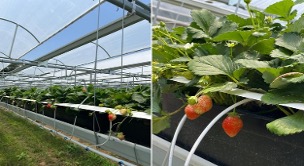
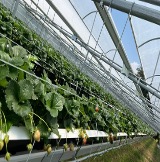
Photo-2 Captivating Harvest: A Glimpse into the Strawberry Fields
Benchmarks against Kenya and Uganda affirm Ethiopia’s dominance. Kenya’s production hovers around 533 metric tons annually, with exports yielding only tens of thousands of USD. Uganda’s footprint remains negligible. Ethiopia, with 516–600 hectares in commercial operations, multi-million-dollar revenues, unit values near USD 3,000+/ton, and penetration into Gulf and European markets, leads decisively. Varieties like Rotmi, Fragaria Soraya, Dorina, Daniel, Florida Brilliance, Monterey, and Rowena demonstrate high yields (30–43 tons per hectare), adaptability, and disease resistance.
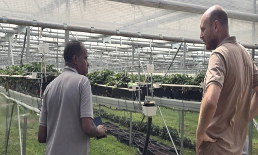
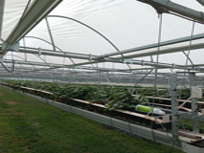
Phot-3 Capturing a moment of elegance and innovation
European buyers prize Ethiopian strawberries for food service, high-end retail, and specialist channels in the UK, Netherlands, France, and Belgium. Addis Ababa’s air links enable 24-hour delivery to Europe, while proximity to the Middle East optimizes costs. The Cool Port Addis at Modjo facilitates sea freight for IQF (individually quick frozen) and processed products, aligning with sustainability imperatives.
Markets are expanding beyond the Gulf to Western Europe. The UK, with diverse non-EU suppliers, represents a promising destination. Innovations in branding — an “Ethiopian Highland Strawberries” premium label — coupled with certifications, could capture higher margins. Complementing with blueberries and raspberries would broaden the portfolio, capitalizing on global demand for berries, projected to sustain robust growth amid health-conscious trends.
Paradox: Questioning Prioritization Frameworks
The government’s reform agenda under the Ministry of Agriculture seeks to dismantle outdated practices and foster sectoral transformation. Flagship programs for wheat, avocado, sorghum, and enset command resources for R&D, subsidies, and infrastructure. Avocado’s 15-year initiative and enset’s flagship underscore commitments to volume-based food security and resilience. Yet strawberries’ omission raises fundamental questions: What criteria govern selection? Volume over value? Domestic staples over forex champions? Tradition over innovation? With strawberries blending high foreign exchange intensity, rapid ROI, technological sophistication, employment elasticity (particularly for women in harvesting and packing), and nutritional impact, their exclusion risks suboptimal resource allocation. A 521-hectare crop outperforming 31,000 hectares in forex generation demands data-driven justification.
This is not a rebuke but a constructive challenge. Transparent metrics incorporating unit value, forex yield per hectare, employment multipliers, nutritional ROI, and climate resilience — would fortify decision-making. Regular audits against regional peers and global benchmarks would enhance responsibility.
To harness this potential, Ethiopia should: Integrate strawberries explicitly into the next 10-Year National Agricultural Development Plan via a dedicated flagship component with ring-fenced funding. Launch subsidized nucleus-out grower schemes linking commercial anchors (e.g., Metrolax Flower, Tal Flower, Euro Flora, Zuoqualla Horti, Bahir Dar Fresh Fruits PLC) with cooperatives, scaling quality-assured production while broadening benefits. Accelerate hydroponics, precision fertigation, and resilient varieties through public-private partnerships, building on Dutch and other collaborations. Develop premium branding, secure GLOBALG.A.P. and other certifications, and diversify into IQF, juices, powders, and desserts for extended shelf life and higher margins. Fully operationalize Cool Port Addis and cold-chain infrastructure for dual air-sea competitiveness. Establish transparent, multi-criteria flagship inclusion protocols and performance audits.
These measures would attract further FDI, as evidenced by commitments like African Farming Industries’ investments, and position Ethiopia as East Africa’s horticultural leader.
Conclusion: A Call to Visionary Action
Ethiopia is at a key inflection point. Strawberries embody the future of high-value agriculture: superior returns on limited resources, climatic supremacy, technological innovation, and profound socio-economic and nutritional benefits. Regional peers underscore the opportunity cost of delay. Global markets crave premium, sustainable, flavourful berries; Ethiopia’s highlands are primed to supply them.
By rectifying this administrative and operational oversight and embracing “Red Gold” within flagship frameworks, Ethiopia can fortify foreign reserves, transfer technology, empower rural communities especially women and etch a world-class horticultural legacy. The comparative data is irrefutable; the economic and developmental logic, unassailable. Policymakers, investors, and partners must now align with urgency and foresight.
The Red Gold revolution beckons. Ethiopia’s ascent in premium horticulture awaits decisive embrace.