14: 02: 2026
The flowers and ornamental plants market remained under considerable pressure in 2025, with varying performance across product categories. This is according to the latest figures released by Germany’s Agricultural Market Information Company (AMI). Estimates show that the overall retail market for flowers and ornamental plants declined to approximately €8.6 billion in 2025.
While most leading products retained their positions, notable shifts emerged in several categories. Seasonal products, in particular, benefited from stronger year-end demand, providing a welcome boost to an otherwise challenging market.
“The results clearly show the pressure our industry continues to face. Many businesses are grappling with rising production costs, cautious consumer spending and generally weak demand throughout 2025,” said Frank Werner, Chairman of the Federal Association of Ornamental Plants (BVZ) within the Central Association of Horticulture (ZVG).
Despite these challenges, industry leaders remain optimistic about floriculture’s enduring place in consumers’ lives.
“Flowers and plants remain an essential part of everyday living for many people. We see this reflected daily. Especially during economically uncertain times, their emotional and lifestyle value becomes even more significant — and this is something we must continue to highlight together,” added Ulrich Haage, Chairman of the Federal Association of Retail Gardeners (BVE).
Bedding and Balcony Plants Hold Ground
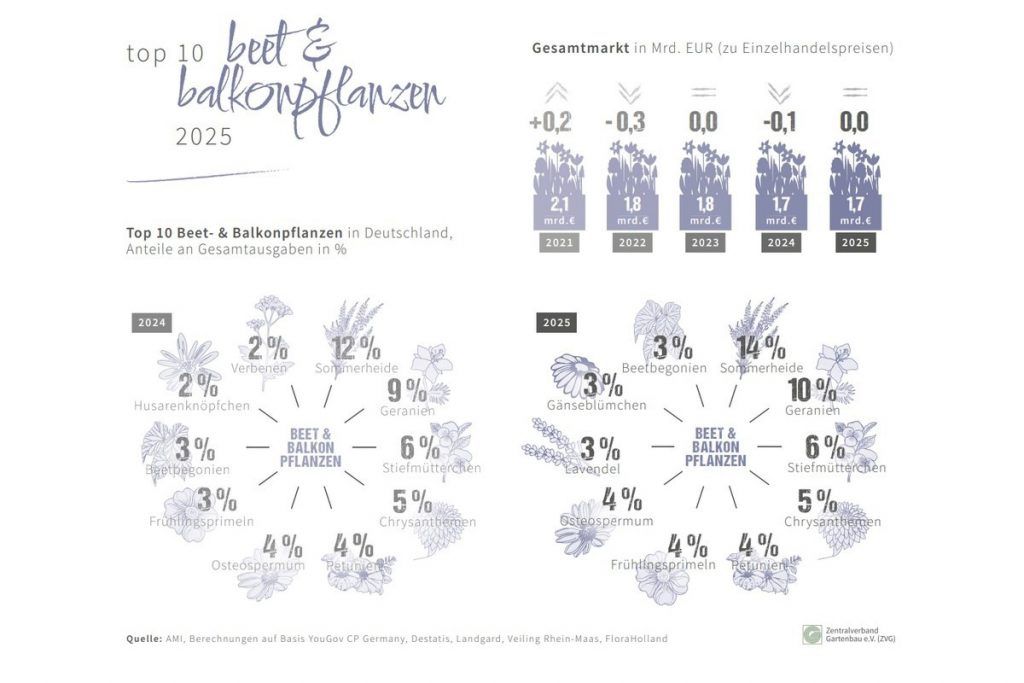
German consumers spent more than €20 per capita on bedding and balcony plants in 2025, according to AMI estimates.
Leading the category for the 11th consecutive year, summer heather strengthened its dominance, increasing its market share by two percentage points. Geraniums also posted slight gains, bucking the broader market trend — likely aided by their strong drought tolerance, an increasingly important factor for buyers.
Pansies retained third position.
The early part of the 2025 season was marked by weather-related caution and subdued consumer activity. However, momentum improved in the fourth quarter, with autumn crops benefiting most from the late-season recovery.
Flowering Houseplants: Orchids Still Rule
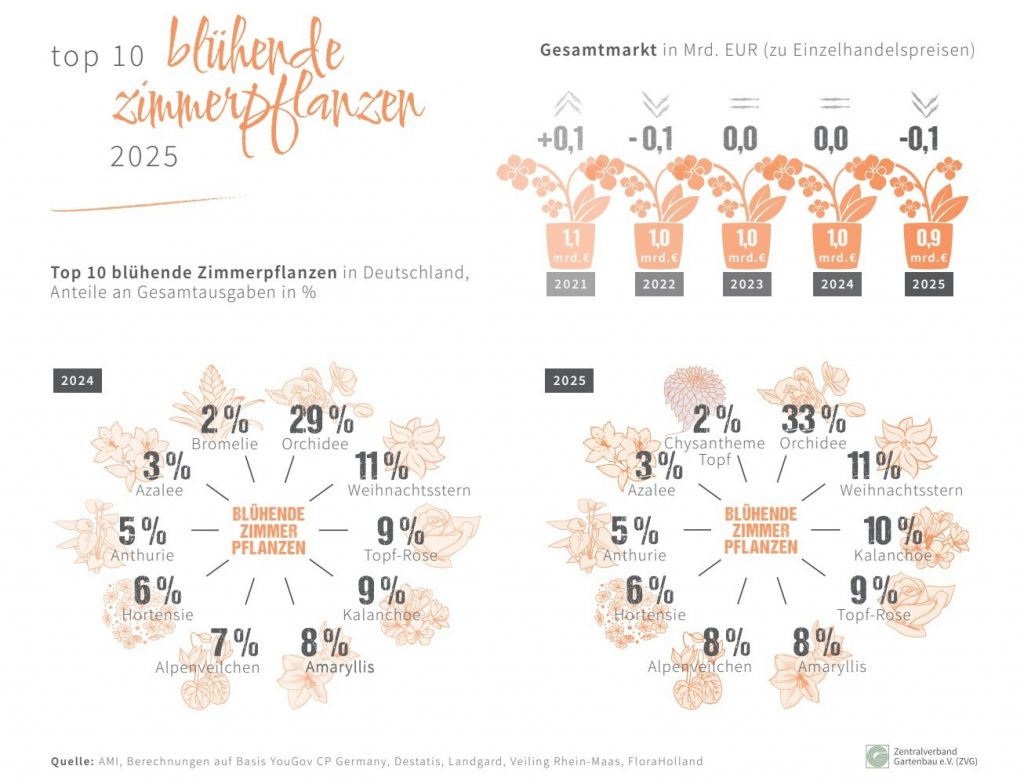
Spending on flowering houseplants dipped slightly to around €11 per capita.
Orchids continued to dominate this category, increasing their share to approximately 33 percent of the market. Poinsettias held firm in second place with an 11 percent share, while kalanchoes climbed to third, pushing roses down to fourth.
Houseplants See Minor Shifts
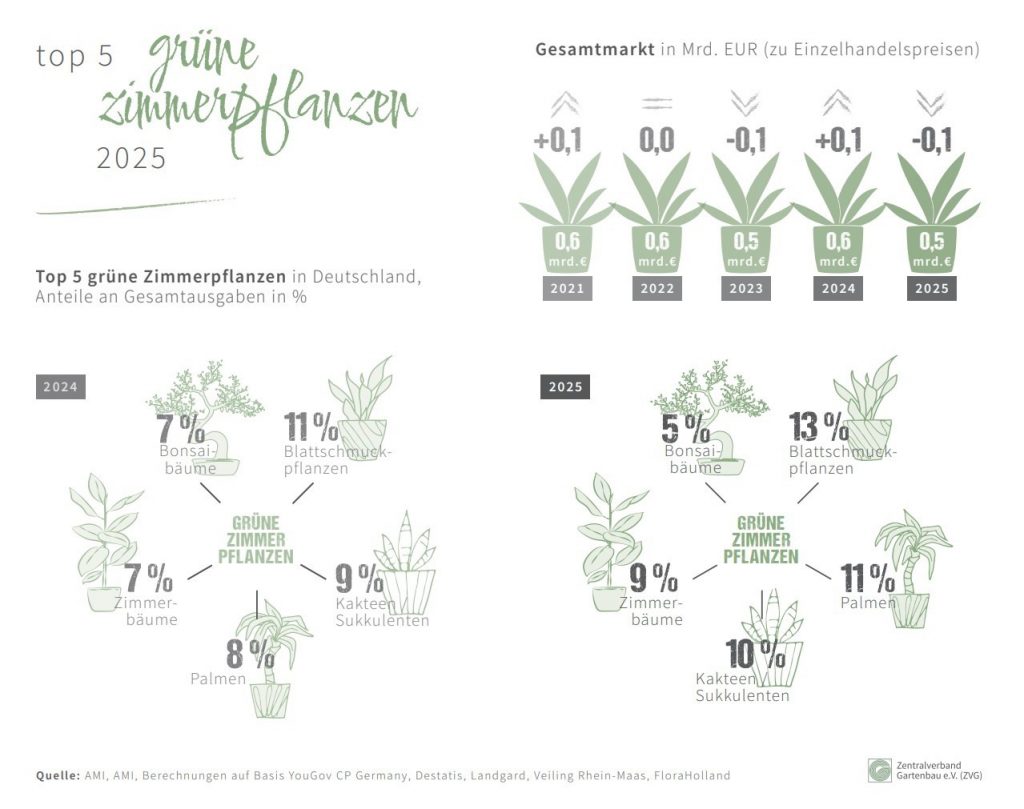
Per capita spending on houseplants also recorded a slight decline, averaging €6 per resident.
The segment remains led by the broad foliage plant category. However, palms posted significant gains, reclaiming second place, while cacti and succulents slipped to third.
Cut Flowers Show Stability
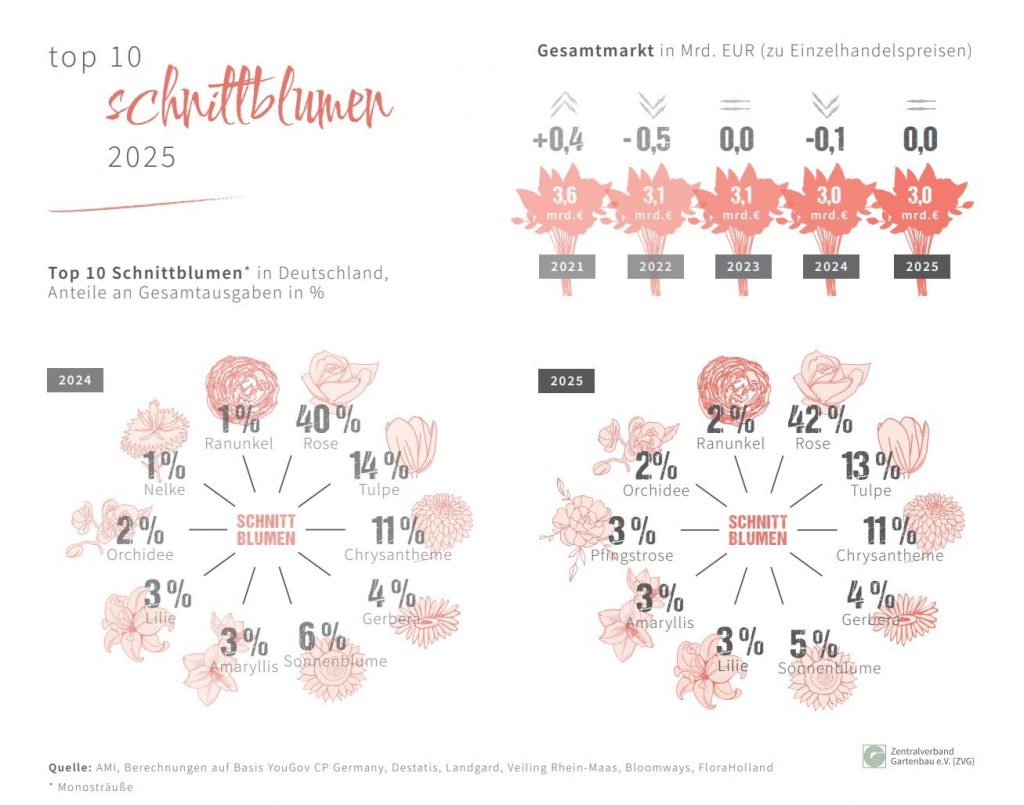
Cut flowers remained the most resilient category, with per capita spending holding nearly steady at €37 in 2025.
A stronger fourth quarter provided welcome support, helping stabilize the segment.
The top three cut flower varieties remained unchanged:
- Roses – 42%
- Tulips – 13%
- Chrysanthemums – 11%
The figures underline a market navigating economic pressure while demonstrating the enduring consumer appeal of flowers and plants — a trend that continues to offer valuable lessons for Kenya’s floriculture industry as it strengthens its position in global export markets.