
09: 04: 2026
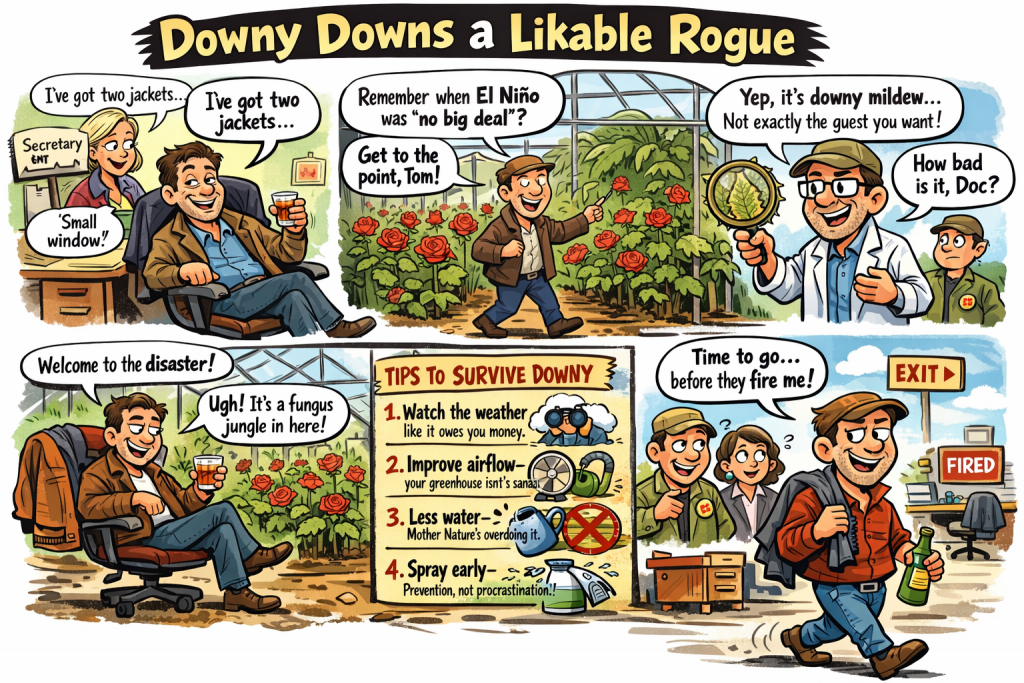
“You know,” Tom began, leaning back like a man who had negotiated peace treaties with worse odds than HR policies, “I’ve invested in two jackets. One lives permanently on the back of my office chair, and the other lives on my back. That way, I’m always in a jacket—and nobody in the office can complain.”
He said this while enjoying his drink with the kind of satisfaction usually reserved for people who have outsmarted both dress codes and life in general. Tom had a way with women too—particularly my secretary, who somehow always found a “small window” to squeeze him in between fully booked appointments. So when she casually suggested I pass by his farm, I didn’t ask questions. Some mysteries are better left unsolved.
“Death and disease are dreary subjects,” Tom declared as I settled in. “If I were you, I’d avoid them entirely.”
“Unfortunately,” I replied, “they seem rather fond of me. And besides, crop doctors are rarely called unless something has already gone terribly wrong. So what exactly has disturbed your peaceful afternoon?”
Tom was the kind of man who didn’t impress you immediately. He crept up on you—like a good rum or a bad decision—until one day you realized you quite liked him. A successful farm manager at one of the region’s biggest flower operations, he balanced spreadsheets by day and bottles by night. Somewhere in between, he also ran a thriving family business. A likeable rogue, if there ever was one.
“You remember when the weatherman announced El Niño?” he asked.
“I remember,” I said. “Though I’ve learned to trust them about as much as a sunny day that tells you to hang out your blankets—only to send you sprinting back inside two hours later.”
“Exactly!” he laughed. “But this time, it’s real trouble.”
“Then stop the suspense,” I said. “You’re not a Netflix series. What’s going on?”
“You’re the doctor,” he grinned. “Come examine your patient. Maybe a walk to the greenhouse will help.”
“Fine,” I said. “But we start with history. Tell me about the patient before I prescribe last rites.”
“For the past week, we’ve had heavy rains,” he began. “And for rose growers, that’s not exactly a blessing. High humidity, prolonged leaf wetness—my sprayers say leaves have been wet for six straight hours. Even I know that’s basically an open invitation for infection.”
Now he had my attention.
“Free moisture, high humidity—perfect conditions for spores to germinate,” he continued. “Morning comes, temperatures rise, humidity drops, and the spores go airborne. It’s like rush hour… but for trouble.”
I kept a straight face, as doctors do when things sound expensive.
“Let’s see the patient,” I said.
Outside, we met his team—production manager, technical manager, head of sprays—an entire cast assembled like a medical drama, minus the background music. They led us into the greenhouse.
Inside, the diagnosis practically introduced itself.
I leaned in, inspecting leaves with a hand lens. “Looks like Peronospora sparsa,” I said calmly.
“What’s that?” the head of sprays asked, already regretting the question.
“Downy mildew,” I replied.
You could feel the mood drop like a failed harvest.
I picked a leaf. “See this greyish, downy coating underneath? That’s the fungus fruiting. It’s subtle—you need a lens to really appreciate the disaster. These purplish-red spots? Classic symptoms. As it progresses, you’ll see angular blotches, yellowing, browning… eventually it looks like the plant has been personally offended.”
The scout team leader leaned in. “And the stems?”
“Also invited to the party,” I said. “Spots on canes, possible twig death. In severe cases—defoliation. Basically, the plant gives up before you do.”
Tom, for once, had gone quiet. He stood there biting his lip, which for a man like him was the equivalent of a five-alarm fire.
“Downy mildew is a serious fungal disease,” I continued. “It thrives in exactly these conditions—cool, wet, humid. It spreads fast, reproduces enthusiastically, and once damage is done… it doesn’t send apology letters.”
“So what are our chances?” the production manager asked.
I gave them the honest version.
“It’s high risk. Fast cycle—about 8 to 10 days. Produces a lot of spores. Spreads via water, wind, even your own workers. Damage is irreversible, and it evolves quickly. In short—it’s not here to negotiate.”
They all nodded, the way people do when they realize the problem has a personality.
“I won’t bore you with fungal physiology,” I said. “Let’s talk survival.”
I walked them through it: watch the weather like it owes you money, fix greenhouse leaks immediately, improve ventilation like your crop depends on it—because it does. Cut down irrigation; the plants are already drowning in generosity from the sky. Thin out excess canopy to reduce humidity. Start preventive sprays early—don’t wait for symptoms, because by then you’re just documenting losses.
“Use both systemic and contact fungicides,” I added. “Group your varieties—resistant, moderate, sensitive. And for now, forget other pests. Downy mildew doesn’t like competition, but it definitely enjoys distraction.”
“And timing?” someone asked.
“Finish spraying by 3 pm,” I said. “Give the crop time to dry. And for heaven’s sake—no stagnant water. Your greenhouse is not a rice paddy.”
By the end, the team looked like they had just attended a very expensive seminar—free of charge, but emotionally costly.
Tom said nothing. Which, coming from him, said everything.
That was the last time he took me for a walk in his greenhouse.
Unfortunately, he fired himself… before the mildew—or management—could do it for him