
February 12, 2026
Bʏ Mᴀʀʏ Mᴡᴇɴᴅᴇ


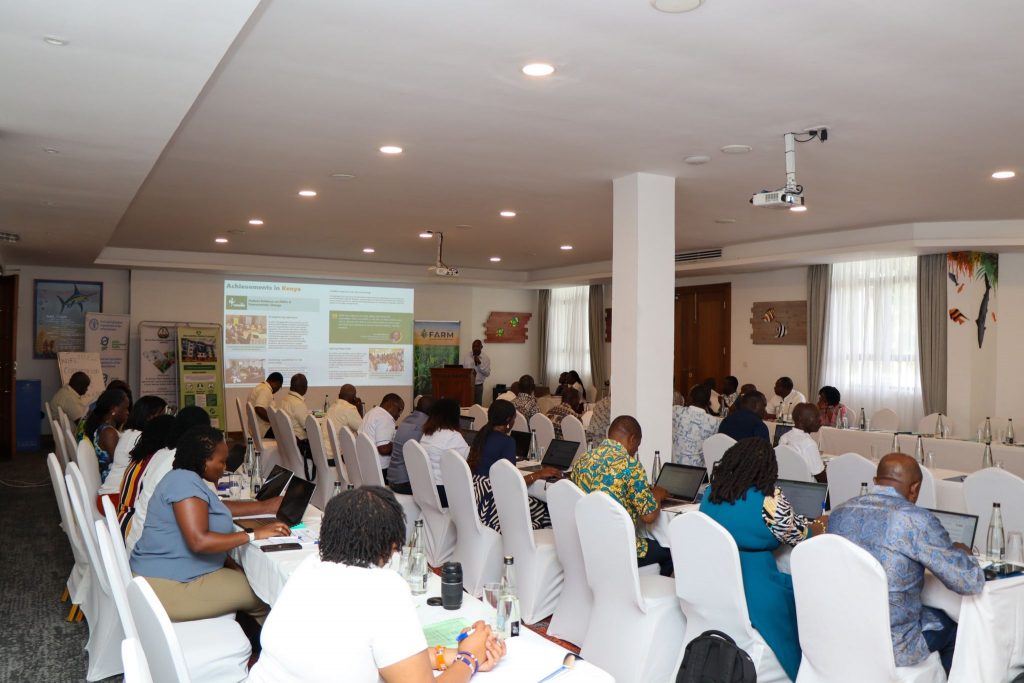
The Kenya Plant Health Inspectorate Service (KEPHIS) earlier this week engaged members of the National Assembly’s Departmental Committee on Agriculture and Livestock in a sensitization meeting aimed at building consensus around the proposed Plant Protection Bill, 2025. The meeting, chaired by Dr. Kanyuithia Mutunga, comes as Kenya seeks to overhaul its plant health governance framework, replacing the outdated Plant Protection Act (Cap. 324), first enacted in 1937 and last substantively reviewed in 1972.
Over the decades, Kenya’s agricultural landscape has changed significantly, driven by evolving pest risks, expanding regional and global trade, and new constitutional arrangements under the 2010 Constitution. The meeting was officially opened by the Principal Secretary, State Department for Crop Development at the Ministry of Agriculture and Livestock Development, Dr. Ronoh Kiprono.
In his remarks, Dr. Kiprono emphasized the critical role of a strong plant health system in safeguarding agricultural production, protecting national biosecurity, and enabling safe and sustainable trade. He noted that plant health is no longer just a technical issue, but a strategic pillar for food security, export competitiveness, and economic resilience.


During the sessions, KEPHIS outlined the rationale behind the proposed Plant Protection Bill, highlighting gaps in the current legal framework that limit effective prevention, control, and management of plant pests. Discussions underscored how emerging pest threats, increased cross-border movement of plant materials, and heightened international phytosanitary requirements have rendered the existing law inadequate for today’s realities.
A central focus of the engagement has been the implications of devolution under Kenya’s Constitution. Participants examined the need for a clearer definition and coordination of roles between the national and county governments, particularly in pest surveillance, control measures, and emergency response. Ambiguity in mandates, KEPHIS noted, can weaken pest management efforts and compromise national plant health outcomes.
The proposed Plant Protection Bill, 2025, seeks to modernize Kenya’s plant protection legal framework to reflect current national and global plant health realities. It aims to clearly define the respective responsibilities of national and county governments in plant pest management, strengthen coordination and governance across all levels of government, and align Kenya’s plant protection regime with international phytosanitary agreements and obligations.

Importantly, the Bill also proposes the formal designation of KEPHIS as Kenya’s National Plant Protection Organization (NPPO), in line with international conventions. This designation is expected to strengthen Kenya’s credibility in international trade, enhance compliance with phytosanitary standards, and support improved market access for Kenyan agricultural products.
The sensitization meeting brought together a range of key stakeholders involved in plant health and agricultural regulation. These included: the Pest Control Products Board (PCPB), the Food and Agriculture Organization of the United Nations (FAO), and Aak-GROW/CropLife Kenya, reflecting the multi-institutional nature of plant health governance.
As deliberations continue, the engagement is expected to inform parliamentary consideration of the Bill and contribute to a more robust, coordinated, and future-ready plant protection framework for Kenya’s agriculture sector.

| FAQ |
|---|
| What is the Plant Protection Act (Cap. 324)? The Plant Protection Act (Cap. 324) is Kenya’s law that governs the prevention, control, and management of plant pests and diseases. Enacted in 1937 and last substantially revised in 1972, the Act gives the Kenya Plant Health Inspectorate Service (KEPHIS) the authority to inspect, regulate, and monitor plants, seeds, and plant products to protect agriculture and national biosecurity. It sets out measures for pest control, quarantine, and certification of plant material for trade, aiming to prevent the introduction and spread of harmful pests. Why is Kenya updating its plant protection laws? The current law is over 80 years old and doesn’t address emerging pest risks, cross-border trade, or modern agricultural practices. Updating it is key for food security, biosecurity, and export competitiveness. How does the Bill handle devolution? It clarifies responsibilities between national and county governments, ensuring coordinated pest surveillance, control measures, and emergency responses. What gaps exist in the current law? The Plant Protection Act (Cap. 324) lacks clear mechanisms for pest management, emergency response, and compliance with international phytosanitary standards. What’s the next step for the Bill? Following stakeholder consultations, including a sensitization meeting in Mombasa, Parliament will review and debate the Bill before it becomes law. |