
21: 05: 2026
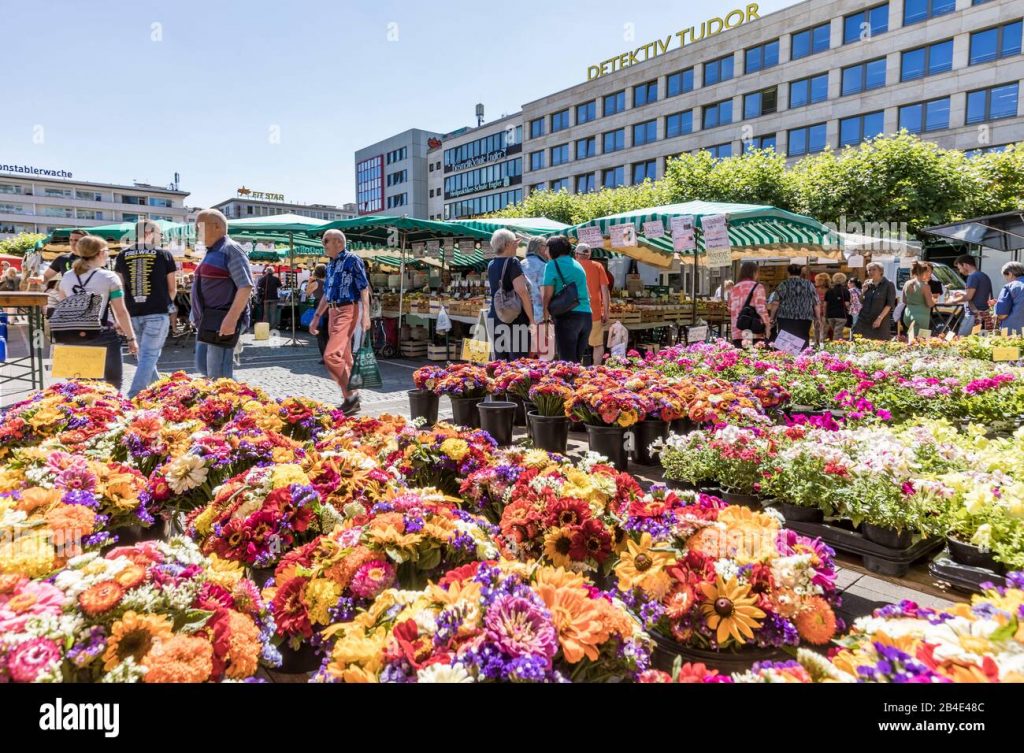
For decades, when Kenya’s flower exporters have spoken of Europe, the conversation has almost always begun and ended with the Netherlands.
That is understandable. The Dutch flower auction system has long been the heartbeat of Europe’s floriculture trade, serving as the continent’s biggest redistribution hub for flowers sourced from across the world. For Kenya, the Netherlands has been both a trusted partner and a vital gateway to European consumers.
But global flower trade is changing.
Today, one market is increasingly emerging as Kenya’s next major growth frontier: Germany.
As Europe’s largest economy and one of the world’s most valuable flower-consuming nations, Germany imported fresh and dried ornamental flowers worth US$1.27 billion in 2024. More significantly, early 2025 figures show the market rebounding strongly, with imports in the first half of the year rising by nearly 25 percent compared to the same period in 2024. For Kenya’s flower industry, this is more than just another export destination. It is a strategic opportunity waiting to be fully seized.
The encouraging part is that Kenya already has a foothold.
In 2024, Kenya exported flowers worth US$53.8 million to Germany, accounting for 4.2 percent of Germany’s total flower imports by value. By volume, Kenya supplied 7,603 tonnes, translating to 4.5 percent of total imports. This makes Kenya Germany’s second-largest direct supplier after the Netherlands.
That position matters.
It confirms that German buyers trust Kenyan flowers. It also proves that Kenyan growers can meet the demanding standards of one of Europe’s most quality-conscious markets.
Even more promising is the growth trend. Between January and June 2025, Kenya’s market share rose to 5.2 percent by value and 5.4 percent by volume, a notable increase that signals rising demand for Kenyan stems.
The question now is no longer whether Kenya can grow in Germany.
The question is how fast.
The answer lies in understanding both the opportunities and the obstacles.
Germany is not just a large flower market; it is a premium market.
The country consistently pays higher-than-average prices for imported flowers, reflecting a consumer base that values quality, freshness, sustainability, and ethical sourcing. This aligns perfectly with Kenya’s strengths.
Kenya’s high-altitude production zones deliver some of the world’s finest roses and cut flowers, prized for their vibrant colours, longer vase life, and strong stem quality. Combined with year-round production and improving sustainability standards, Kenya already possesses the technical advantages needed to expand.
Yet despite these strengths, Kenya’s growth in Germany remains constrained by one major factor: visibility.
A significant portion of Kenyan flowers destined for German consumers still enters the market indirectly through Dutch auctions and logistics channels. By the time those flowers reach supermarket shelves or florist shops in cities like Berlin, Hamburg, or Munich, they are often perceived as Dutch supply.
This has commercial consequences.
It weakens Kenya’s direct brand recognition, reduces pricing power, and limits relationships with end-market buyers.
To grow Germany’s market meaningfully, Kenya must move beyond simply supplying flowers. It must become visible as the source.
This means building direct commercial partnerships with German supermarket chains, floral wholesalers, online flower retailers, and event supply companies. Germany’s retail landscape is increasingly open to direct sourcing relationships, especially when suppliers can guarantee consistency, compliance, and traceability.
Kenya’s exporters must position themselves to meet this demand.
Branding will also play a critical role.
German consumers are highly responsive to sustainability narratives and product origin stories. Kenya has a powerful story to tell — one of flowers grown under equatorial sunshine, cultivated with improving environmental stewardship, and supporting thousands of livelihoods across rural communities.
That story needs to be told more deliberately.
A stronger “Flowers from Kenya” identity in Germany could elevate Kenya from being merely a supplier to becoming a recognised premium floral origin.
Sustainability certification will be central to this effort.
Germany’s buyers increasingly require proof of ethical labour practices, water stewardship, carbon accountability, and minimal pesticide residue. Larger Kenyan farms have made strong progress here, but broader sector-wide compliance will be essential if Kenya is to capture more premium shelf space.
Smaller growers, in particular, need support to meet certification requirements.
Logistics remain another critical challenge.
Airfreight costs continue to squeeze margins for Kenyan exporters, often undermining competitiveness against European suppliers who benefit from shorter delivery chains.
To overcome this, Kenya must pursue smarter freight solutions — including expanded direct cargo routes into Germany, improved cold-chain efficiency, and stronger consolidation strategies that reduce per-unit transport costs.
Product diversification offers another path to growth.
Germany’s floral preferences are evolving. While roses remain dominant, there is growing demand for mixed bouquets, seasonal flowers, dried floral arrangements, and sustainably packaged products.
Kenya has the production capacity to diversify into these segments, but doing so will require market intelligence and closer alignment with German consumer trends.
The opportunity is clear.
Germany’s flower market is large, premium, and expanding. Kenya has already proven its ability to compete there.
What remains is strategic execution.
If Kenya can strengthen direct buyer relationships, invest in national branding, deepen sustainability credentials, improve logistics, and diversify its floral offering, there is every reason it could double its market share in Germany over the coming years.
The Dutch market opened Europe for Kenya.
Germany could define the industry’s next chapter.