
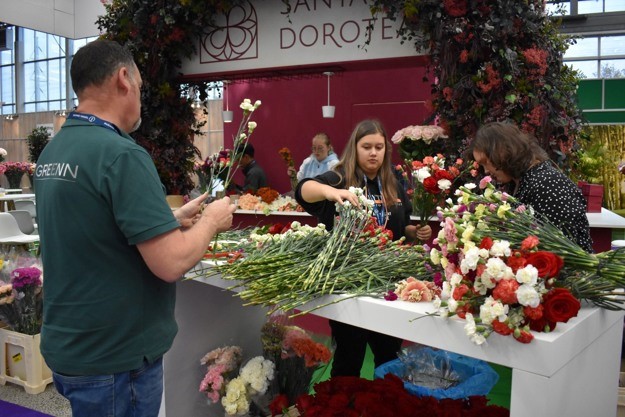
By assembling bouquets locally, Kenya could capture European and Gulf market margins now lost to overseas packers, boosting earnings for farmers and exporters alike. The Industry Could also generate Higher Value Despite Recent Shocks, Rabobank’s van Horen Says
Kenya’s cut flower industry,
already a global powerhouse supplying 40%of Europe’s blooms, has the potential to earn even more by moving up the value chain. According to Lamber van Horen, senior fresh produce specialist at Dutch lender Rabobank, exporting pre-assembled bouquets instead of bulk stems could allow Kenyan growers to capture margins currently taken by packers in the Netherlands, Miami, and Tokyo.
Despite recent shocks from COVID-19 air transport disruptions to rising freight costs, the sector has remained resilient. By establishing local bouquet assembly facilities near production hubs like Naivasha or logistics centers such as Nairobi and Mombasa, exporters could provide ready-to-sell arrangements for European retailers, turning stems into real profit.
Looking beyond Europe, Gulf markets including Qatar, the UAE, Saudi Arabia, Kuwait, and Bahrain now represent $100 million in annual exports.
Strengthening air links to these high value markets and offering pre-packaged bouquets could position Kenya as not just a supplier of flowers, but a hub for high margin floral products worldwide.
With around 200,000 workers on flower farms and another 100,000 in logistics, the move up the value chain could deliver broader economic benefits while securing Kenya’s spot as the fourth-largest flower exporter globally.
“The flower industry is resilient, but it can create more jobs and added value,” van Horen said.
Specifically, he said Kenya could develop local facilities to assemble mixed bouquets for the European retail market rather than exporting bulk stems. In Europe, around half of the flowers are sold as ready-made mixed bouquets.
“By assembling bouquets locally, Kenya could capture part of the margin currently taken by bouquet makers in the Netherlands, Miami or Tokyo,” van Horen said.
This would require European buyers, particularly large retailers, to pay for sorting, assembly, packaging and labelling services in Kenya, allowing them to receive pre-packaged bouquets ready for store shelves.
Stable outlook for 2026
Looking ahead, van Horen expects Kenya’s industry to operate in a relatively stable European market this year. Demand in Europe is forecast to remain steady despite geopolitical risks, providing continued support for exporters.
Kenya supplies about 40% of Europe’s cut flower

imports and accounts for more than 15% of global trade, supported by air links including those operated by Kenya Airways.
Another key issue will be logistics reliability to Gulf markets. In recent years, the industry has sought to diversify beyond the European Union by expanding sales to Qatar, the United Arab Emirates, Kuwait, Bahrain and Saudi Arabia. According to Rabobank, annual cut flower shipments to these Gulf countries now total around $100 million.
The Red Sea crisis, which has forced shipping lines to reroute vessels via the Cape of Good Hope and extended transit times, has raised sea freight costs and pushed many exporters back to air transport. Industry players will be watching whether Nairobi can secure regular and competitive air connections to Gulf destinations, which offer attractive prices for Kenyan exporters due to strong local purchasing power.
It is estimated that around 200,000 people work directly on flower farms in Kenya, with a further 100,000 employed in logistics and related services. This numbers will increase with assembling of bouquets locally.
Kenya ranks as the world’s fourth-largest exporter of cut flowers, behind the Netherlands, Colombia and Ecuador, generating between $450 million and $520 million a year from cut rose exports.