
February 12, 2026
Bʏ Mᴀʀʏ Mᴡᴇɴᴅᴇ
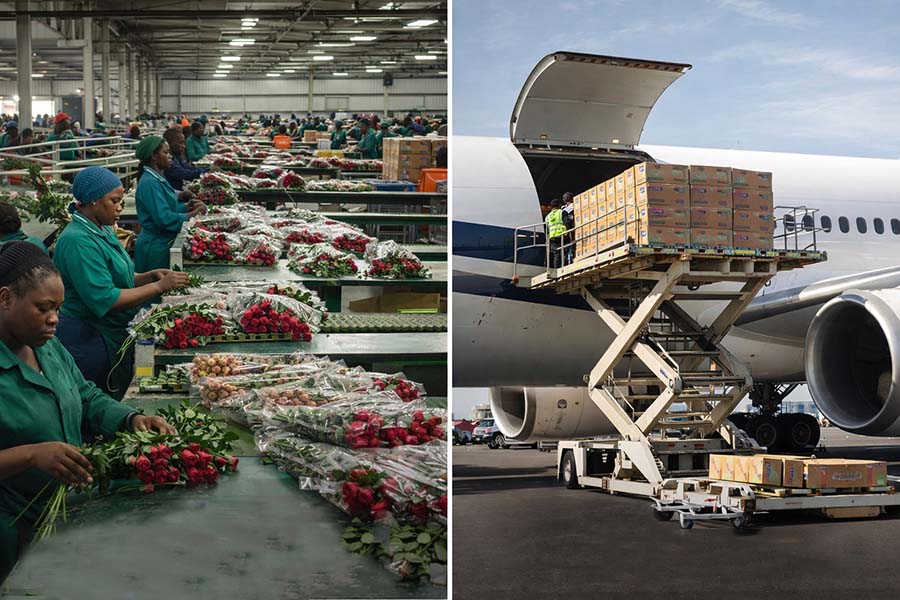
Valentine’s Day has grown into a crucial commercial moment for Kenya’s floriculture sector, not just a romantic occasion in distant markets, but a season that materially shapes the business year for growers across the country. For many farms, the weeks centered around February 14 are more about strategy, timing, price premiums, and logistics that can make or break annual performance.
Volume, Value, and Timing
In 2025, Kenya’s flower exports were forecast to reach around 280,000 tonnes, up from 260,000 tonnes the year before, mostly due to increased demand during peak shipping periods like Valentine’s Day. This export growth is linked to diversification into new markets, including the United Arab Emirates and China, even as traditional markets such as the European Union and Britain remain dominant.
Valentine’s Day accounts for 30–35% of annual sales in the flower sector. In the days leading up to February 14, Kenya regularly exports thousands of tonnes of roses, with records showing over 4,200 tonnes of roses shipped in the final week before Valentine’s Day in 2025, a slight increase on the previous year.
A 2025 logistical update shows the global cut‑flower market valued at approximately $35 billion to $39 billion as of 2024-2025, with projections indicating strong growth to over $50 billion by 2030, highlighting the sector’s long‑term growth drivers.
Kenya is among the top cut‑flower exporters in the world, ranking just behind long‑established leaders such as the Netherlands, Colombia, and Ecuador. In global market share terms, Kenya accounted for about 6.3% of cut flowers and buds exported in 2023. Roses are the primary export product, accounting for over 60% of total floriculture exports in value, even as the sector offers a wide range of other cut flowers, such as carnations and summer varieties.
These figures are grounded in decades of transformation in commercial flower production in Kenya, which began modestly in the late 1960s and, by the 1990s, had evolved into a major export sector thanks to greenhouse technology, improved production methods, and global market integration.

Airfreight, Cold Chain, and Capacity Constraints
If Valentine’s Day is a harvest peak, logistics is its make‑or‑break partner. Most Kenyan flowers are exported by air, and demand for cargo space surges dramatically in January and early February each year. In recent peak seasons, weekly freight demand has exceeded available capacity, creating a structural bottleneck that can limit exports even when production is strong.
This imbalance highlights a core tension where production is generally sufficient, but movement remains the constraint, particularly when freight costs have more than doubled in recent years, from about $2.40 per kilogram to around $5.70 per kilogram. For growers, especially smaller exporters with tighter margins, freight cost spikes can erode profit even when demand and quality are high.
Cold chain integrity adds another layer of operational tension. Maintaining flowers at 1–3°C from farm pre‑cooling through to final delivery preserves vase life and premium quality, but any break in that chain reduces value. Real‑time monitoring systems and rigorous post‑harvest handling have become essential to sustain Kenya’s reputation for quality.
Revenue, Costs, and Market Shifts
Valentine’s Day’s contribution to annual export volume is not just about bulk shipments because it also affects pricing dynamics across the year. The sector’s export earnings were forecast at around 110 billion Kenyan shillings (about $851 million) in 2025, up from roughly $835 million in 2024, with Valentine’s performance cited as a strong contributor.
Despite rising freight costs and logistical friction, overall export earnings have edged upward as growers expand cultivation areas. Recent reports note around 5,300 hectares under flower cultivation and as new investors enter the sector, the rising costs of inputs, taxes, and freight continue to compress margins, particularly for smaller growers whose operations are less diversified and less integrated into direct global supply chains.
Market Diversification
While Europe, especially the Netherlands, Britain, and Germany, remains the dominant destination for Kenyan flowers, emerging markets are gaining ground. The Gulf states, Japan, China, and Malaysia are attracting increasing volumes, offering growers alternative avenues for expansion and price premiums.
Diversification is not merely about new geography but also about product mix and market segmentation. Roses still lead, but specialty varieties and non‑traditional cuts can attract niche segments willing to pay higher prices. With more exporting destinations and differentiated products, growers can spread risk and reduce reliance on a single market cycle.
Freight, Regulations, and Sustainability
The logistics bottlenecks around Valentine’s are symptomatic of deeper structural issues. Freight capacity limitations are compounded by regulatory shifts, such as stricter phytosanitary requirements in major markets. These can slow clearances and increase inspection costs, adding pressure on growers to uphold export standards.
Sustainability concerns also intersect with operational realities. While not a direct driver of short‑term demand, environmental compliance and social governance standards increasingly inform buyer decisions, particularly in European markets. Growers today must balance high‑performance cultivation with responsible practices that meet evolving global expectations.
From Valentine’s to Mother’s Day and Beyond
For growers, Valentine’s Day is part of a seasonal strategy that includes Mother’s Day, Women’s Day, and other peak occasions. Lessons learned in each cycle, in variety performance, supply chain coordination, and buyer responsiveness, feed into future planning. Growers now use Valentine’s data as a benchmark for scheduling, pricing, and logistics strategies later in the year.
Peak season performance also influences investment decisions in greenhouse tech, cold chain infrastructure, and crop management systems and areas where incremental improvements can yield measurable returns.
Inasmuch as Valentine’s Day is a cultural moment for gift givers abroad, for Kenya’s cut‑flower growers, this is a strategic moment that demands excellence in production, precision in logistics, and savvy in market strategy. The global demand for fresh flowers places Kenyan growers at the centrre of a complex commercial ecosystem that rewards those who can synchronize farm‑level execution with international market cycles.
| FAQ |
|---|
| How much of Kenya’s flower exports are influenced by Valentine’s Day? In 2025, Kenya’s flower exports for the Valentine’s Day season reached 4,200 tonnes, maintaining the high volume seen in the previous year. This peak period accounted for 30% to 35% of the industry’s total annual sales. This makes it one of the most critical periods for growers to maximize revenue. Which international markets drive Valentine’s demand? Europe remains dominant, taking about 80–85% of exports, led by the Netherlands, Germany, and the UK. However, emerging markets like China, South Korea, Japan, and Gulf states are growing at 8–12% annual rates, offering diversification opportunities. South Korea imported Kenyan flowers worth approximately $78,000 in 2024, signaling early growth potential. Does Valentine’s performance affect other peak seasons? Yes. Lessons from February influence planting schedules, logistics planning, and variety selection for Mother’s Day, Women’s Day, and Easter, the next critical sales periods. Performance metrics during Valentine’s often determine the success of the remaining season. |