
February 26, 2026

Floriculture wasn’t the grand career plan that Stephen Mogonchi Okong’o had when he first set foot in a flower farm. However, when at the university, an unexpected opportunity abroad placed him in Israel’s thriving floriculture sector, beginning as an intern.
“Over the years, my path in floriculture has enabled me to explore industries in Kenya, Israel, and Türkiye, giving me a diverse perspective on how flowers are grown, protected, and brought to global markets,” he says.
Bʏ Vɪᴄᴛᴏʀ Oᴋᴇʏᴏ,
Currently an agronomist at Beauty Dan Flowers Ltd, Mogonchi has nine years of experience in crop protection, irrigation, and farm management, and understands the crossroads Kenya’s horticulture industry stands at.
“As Agronomists, we are witnessing firsthand the tension between tradition and innovation, the promise of new technologies and the reality of limited resources, and the urgent need for policy support to keep Kenyan flowers competitive,” he says.
Pests and Policies
Ask any grower, and they’ll tell you: floriculture is a business of constant problem-solving. For Mogonchi, the biggest challenges today lie in crop protection.
“Each year we lose active materials for pest control due to restrictions from the European market,” he explains. “The insects don’t go away, but our tools to manage them become fewer, consequently, in danger of being less effective.”
According to the agronomist, in the past decade, no truly new solutions have arrived, leaving growers to battle resistant pests with shrinking chemical options. The market demands safer products, but farms still need reliable ways to protect their crops.
For Mogonchi, the answer lies not in fancy delivery systems but in early detection and predictive models.
“It’s not about whether you spray with drones or manually. What matters is identifying the problem early enough to act.”
Technology: Hype vs. Reality
The industry is abuzz with innovations, from drones tracking pests to AI-powered greenhouse monitoring systems. But Mogonchi offers a grounded view.
“AI and drones are helpful tools, but they can’t replace human expertise. The system is still rooted in what we already know about plant performance.”
He further explains that technology should support, not substitute, human capital. He insists that Kenya’s greatest strength is still its human resource, knowledgeable growers who combine on-the-ground experience with adaptive thinking.
Lessons from Abroad
Having worked in Israel and Türkiye, Mogonchi sees glaring contrasts with Kenya. Chief among them is logistics. “In South America, you have cheaper flights for flowers. In Kenya, cargo is so expensive that it eats into competitiveness.” Add to that the bureaucratic hurdles of export permits and lab testing, and Kenya’s growers are left battling inefficiencies outside their control.
He points to Israel’s example of government-backed training and infrastructure. “In Kenya, farmers are capable, but they often lack timely access to information or standardized training. Government facilitation is crucial.”
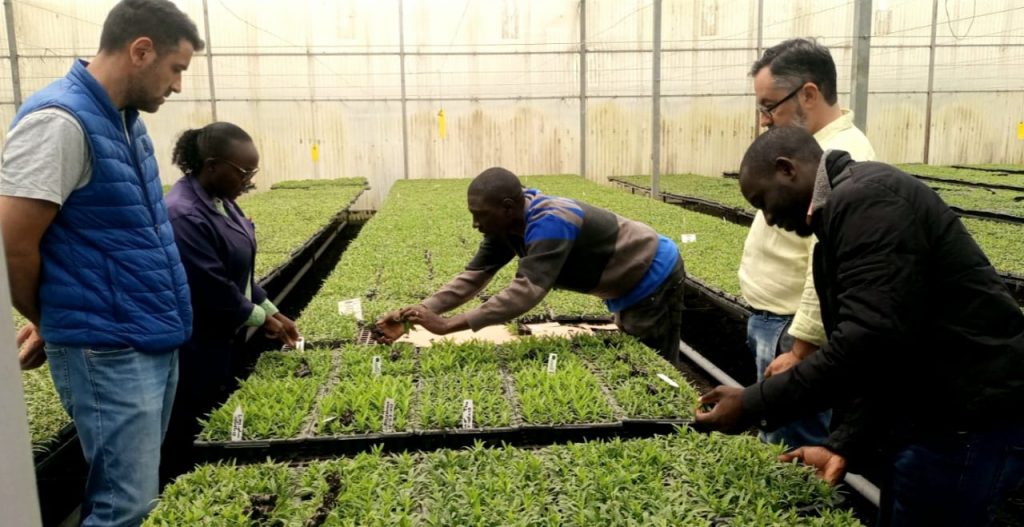
Most Kenyan flower farms fall into the small and medium-scale category. For them, adopting cutting-edge technology is a delicate balancing act. Mogonchi suggests a step-by-step approach, starting with what you need. “For example, drip irrigation is affordable and effective before moving on to costly drone spraying.
The Compliance Question
As Kenya expands into markets beyond Europe, including the Middle East, Russia, and Asia, compliance with international standards becomes non-negotiable. But for many farms, the bar keeps moving. “Most farms started with no regulations. Then standards like GlobalG.A.P. or MPS came later, asking for things like concrete floors in greenhouses. For a farm already set up, that’s costly to retrofit,” Mogonchi says.
Yet compliance is not optional. Stricter rules ensure sustainability, worker safety, and environmental responsibility. The challenge is making sure small and medium farms can keep up without being locked out of markets.
Despite the hurdles, Mogonchi is optimistic. Kenya has an educated labor force, a favorable climate, and an established reputation in the global flower trade. New markets in Russia, Australia, and the Far East offer room for growth.
But he cautions that success will hinge less on individual farms and more on systemic support. “The government must harmonize systems, make cargo affordable, and open up access to services like labs and training. The opportunities are there, but only if the system makes them accessible.”
The future of Kenyan floriculture, he believes, rests on a three-way balance:
• Growers’ adaptability in solving daily challenges.
• Technology’s potential to enhance efficiency and prediction.
• Government’s role in clearing the path with policy and infrastructure.
At stake is more than just flowers. It’s about jobs, exports worth billions, and Kenya’s position as Africa’s floral powerhouse. As Mogonchi puts it, the question is not whether Kenya can compete, it’s whether the right systems will let it bloom to its full potential.