
February 26, 2026
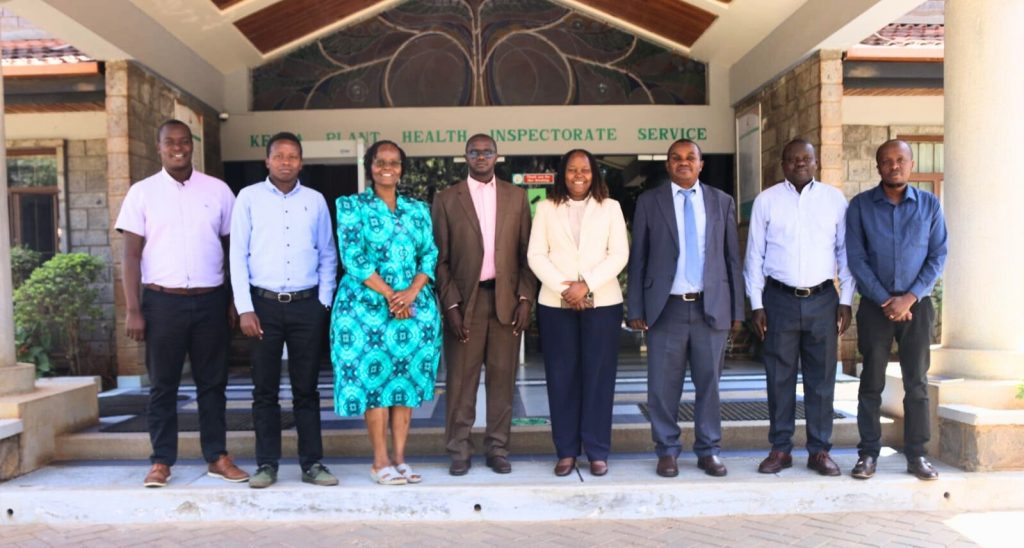
Kenya’s plant health regulator is stepping cautiously but deliberately into one of the most transformative frontiers in modern science. The Kenya Plant Health Inspectorate Service recently hosted high-level discussions with the International Service for the Acquisition of Agri-biotech Applications, AfriCenter and the University of Nairobi to explore structured collaboration in synthetic biology, signaling a growing institutional interest in harnessing advanced biotechnology for agricultural resilience.
The consultative meeting, led by Dr. Isaac Macharia on behalf of the KEPHIS Managing Director, brought together regulatory leaders, researchers, and laboratory specialists. Among those present were Dr. Margaret Karembu, Director of ISAAA AfriCenter; Dr. Godfrey Ngure, Senior Program Officer at ISAAA AfriCenter; Prof. Douglas Miano from the University of Nairobi; and the KEPHIS laboratory team led by Dr. Florence Munguti, Ag. Director of Laboratory Services. While the gathering was consultative in nature, it reflects a strategic recognition that plant health management is entering a new scientific era.
Synthetic biology, often described as the application of engineering principles to biological systems, builds on advances in molecular biology, computational sciences, and bio-engineering. Unlike conventional bio-technology, which typically transfers or modifies existing genes, synthetic biology allows scientists to design and construct new biological components and systems with specific functions. In agriculture, these tools are increasingly being explored to sharpen diagnostics, improve pest and disease surveillance, and strengthen crop protection strategies in ways that are faster, more precise, and potentially more sustainable.
Plant health is directly tied to trade credibility. Interceptions in export markets, emerging pest pressures, and evolving phytosanitary requirements demand highly responsive diagnostic systems. Discussions during the meeting therefore, centered on how synthetic biology could enhance plant disease detection, monitoring, and management frameworks within Kenya’s regulatory ecosystem.
One of the most promising applications lies in next-generation diagnostics. Synthetic biology enables the development of highly sensitive detection tools capable of identifying pathogens at earlier stages, even before visible symptoms appear. This has significant implications for quarantine services, seed certification, and export inspections. Earlier detection reduces spread, lowers economic losses, and strengthens compliance with international phytosanitary standards.
Beyond diagnostics, participants examined opportunities for joint research and capacity development. Regulatory science must evolve alongside technological innovation. As new biological tools are developed, regulators need the scientific depth to evaluate risks, validate methods, and establish evidence-based policies. Strengthening laboratory infrastructure, training personnel, and building collaborative research pipelines were highlighted as priority areas for partnership.
Equally important is the question of responsible adoption. Emerging technologies such as synthetic biology require careful governance to ensure biosafety, public trust, and environmental protection. The meeting emphasized cross-institutional collaboration not only as a pathway for innovation but also as a mechanism for maintaining rigorous oversight. By engaging early and proactively, KEPHIS positions itself not merely as a gatekeeper but as an informed participant in shaping how new technologies are integrated into national systems.
The discussions also align with broader continental conversations about strengthening Africa’s scientific autonomy. Building local expertise in advanced biotechnology reduces reliance on external diagnostic systems and enhances the region’s ability to respond to transboundary plant health threats. For Kenya, which serves as a regional trade hub, this capacity carries both national and East African significance.
While no formal agreements were announced, the consultative tone suggests groundwork is being laid for structured collaboration. In reaffirming its commitment to working with research institutions and partners, KEPHIS signaled that innovation and regulation are not opposing forces, but parallel pillars of agricultural sustainability.
While plant health threats continue to grow more complex and global trade standards tighten, the integration of synthetic biology into regulatory science may become more essential.