
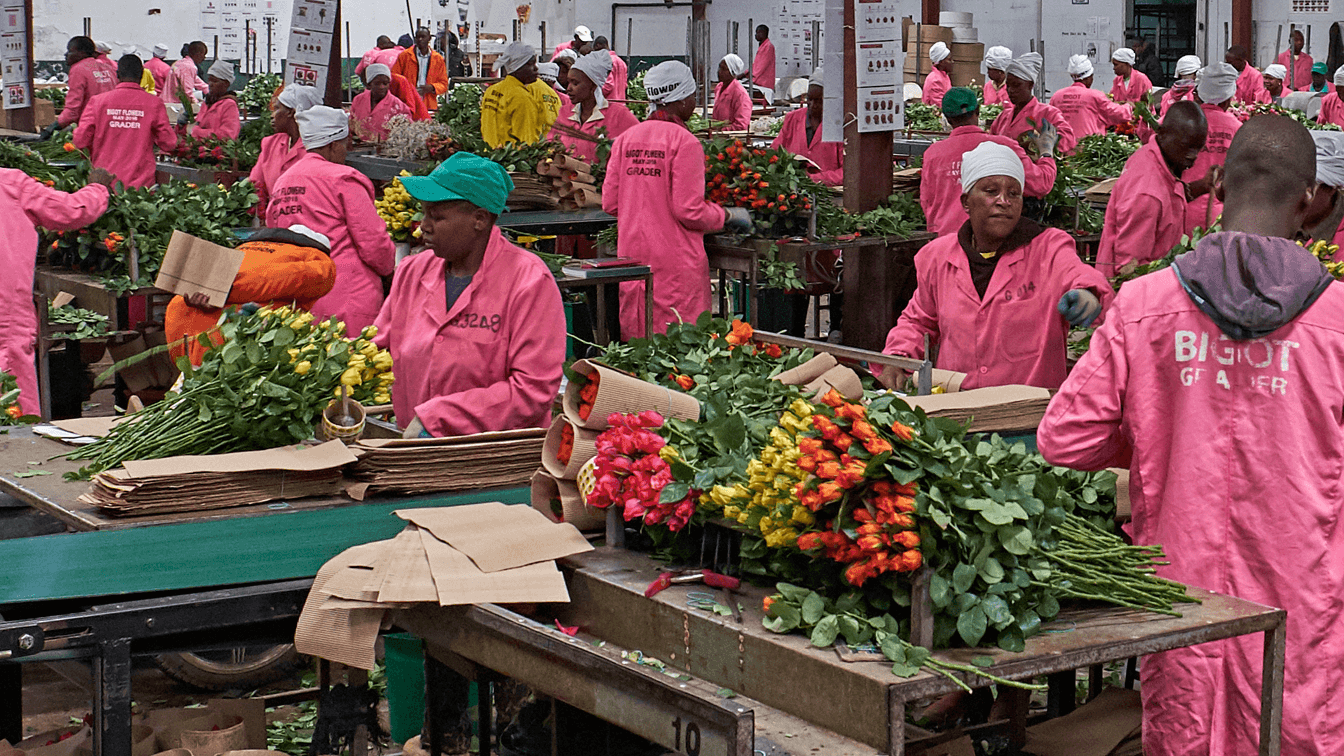
Kenya’s flower industry, which brought in $835 million in export earnings in 2024, remains heavily reliant on the European Union, where close to 70 percent of cut flowers are shipped. Europe’s strict phytosanitary checks and pesticide residue rules continue to challenge growers, making the need to diversify markets more urgent than ever. In response, exporters are increasingly exploring opportunities in the Middle East, Asia, and other non-traditional destinations.
The United Arab Emirates is one of the fastest-growing alternative outlets. Dubai and Abu Dhabi in particular have become key re-export hubs, serving not only the Gulf region but also broader Asian buyers. With direct flights from Nairobi providing short transit times, flowers reach markets in peak condition. The Gulf’s demand is shaped by cultural and religious calendars such as Ramadan and Eid, which generate high seasonal consumption. For Kenyan growers, the Middle East offers fewer regulatory hurdles compared to the European Union, though high freight charges remain a limiting factor.
In Asia, Kenya’s position is still modest but gradually strengthening. China accounted for about 2 percent of exports in 2024, following a bilateral agreement that opened the market in recent years. Although current volumes remain low, China’s flower market is estimated is valued at around 300 billion yuan annually, which translates to roughly $42 billion USD, with online platforms driving consumer purchases. Trial shipments are ongoing, with exporters testing varieties and vase life performance for this distant market. India has also begun to feature as a destination, with Kenyan roses entering high-end markets in cities like Mumbai and Bangalore. Meanwhile, Japan, though small in volume, remains a high-value outlet, with buyers demanding premium stems and strict sustainability certification.
Beyond Asia and the Gulf, Kenya has also secured a niche foothold in Central Asia. In 2024, Kenya exported 16.67 million flowers worth $4.97 million to Kyrgyzstan. This was an increase from 12.16 million flowers valued at $3.5 million in 2023. This illustrates how diversification is extending beyond traditional trade routes and into emerging destinations where demand for premium roses is growing.
The continued search for alternative markets is not just about reducing dependency on Europe but also about ensuring resilience in the face of compliance costs and logistical challenges. Farms have already begun adjusting their production and shipment strategies to cater to the tastes of Gulf and Asian buyers. Trade associations, including the Kenya Flower Council, are lobbying for expanded cargo connectivity to Guangzhou, Mumbai, and Riyadh, while also supporting investment in sea freight solutions for bulk exports.
Despite the progress, the reality is that the European Union will remain the anchor market. However, diversification is steadily reshaping the industry’s export map. The Gulf is emerging as a reliable buyer, China is a long-term growth bet, and niche destinations like Kyrgyzstan reflect the widening reach of Kenyan flowers. For growers facing rising costs and tightening EU oversight, the push into new regions is no longer experimental, as it is a strategic necessity for sustaining the sector’s future.