
January 22, 2026
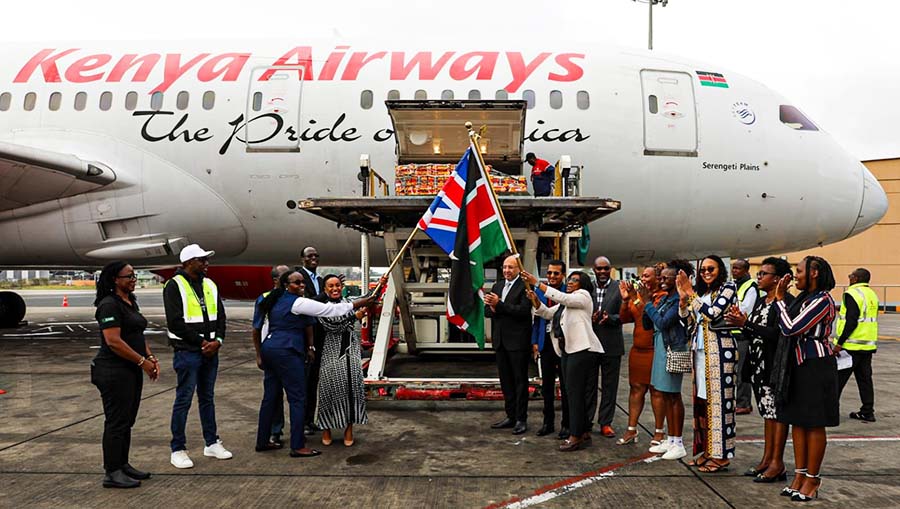
Kenya recently achieved a historic milestone by shipping its first consignment of Apple mangoes to the United Kingdom, confirming compliance with stringent British food safety and plant health standards. This pilot export signals Kenya’s readiness to penetrate a premium market long closed to its flagship fruit variety. The breakthrough promises economic uplift for thousands of smallholder farmers while showcasing decades of investment in quality and compliance.
Access to premium markets like the UK was blocked for years after fruit fly interceptions between 2010 and 2014 prompted Kenya’s self-imposed export ban. Post-ban in 2021, lingering issues in surveillance, residue testing, cold-chain reliability, and traceability slowed buyer confidence. Key reforms included a nationwide fruit-fly trapping network, mandatory registration for orchards and packhouses, systems-based pest risk management, enhanced lab inspections, and stricter cold-chain protocols. These upgrades addressed gaps that limited Kenya’s 650,000-tonne output from reaching advanced importers like the UK, which consumes over 70,000 tonnes yearly.
Apple mangoes dominate over 80% of Kenya’s mango production, thanks to more than 20 years of focused efforts in varietal improvement, orchard management, and post-harvest techniques. These mangoes stand out with their uniform size, vibrant color, low fiber, juicy texture, natural sweetness, and extended shelf life of up to 30 days under controlled conditions, followed by weeks of freshness, which perfectly match UK consumer and retail demands. Unlike other varieties often used for processing or cooking, Apple mangoes are prized for fresh eating, making them ideal for year-round markets like the UK.
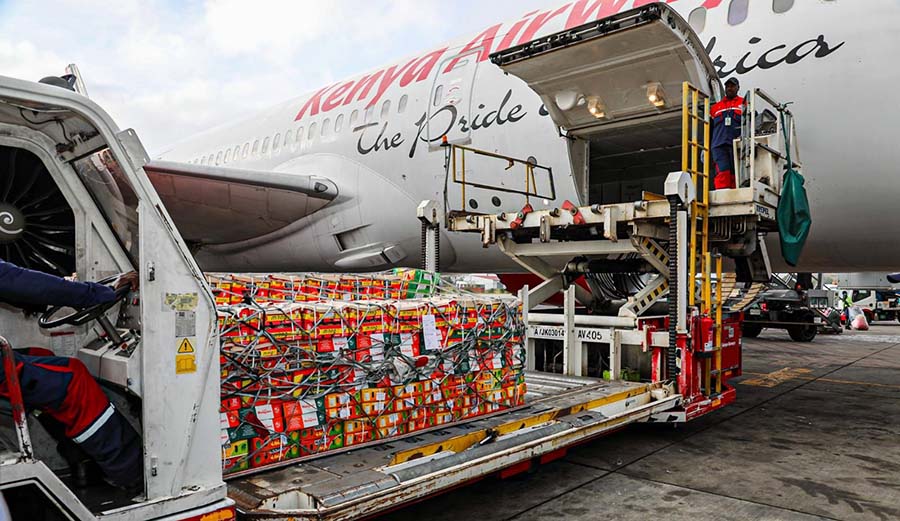
Kenya produces about 650,000 tonnes of mangoes annually, valued at over KShs 10 billion, positioning it as one of Africa’s top producers. The Apple variety drives most exports due to its high volume and durability, but success hinges on unbroken cold-chain management from farm to table. This shipment opens a high-value segment previously inaccessible, boosting prospects for sustained trade growth.
The Apple mango chain excels in pro-poor impact, with smallholder farmers leading production through organized supply systems that enhance rural incomes, youth employment, and women’s roles in mango regions. This model fosters livelihood diversification and inclusive growth, turning a popular crop into a development engine. As Floice Mukabana, CEO of KEPROBA, noted at the flag-off, “This is a testament to our strengthened sanitary and phytosanitary systems, post-harvest handling, traceability, and cold-chain integrity from farm gate to final delivery.”
The shipment aligns with the UK-Kenya Economic Partnership Agreement, active since March 2021, amid efforts to cut trade barriers and double bilateral trade by 2030. It was enabled by the UK-funded Regional Economic Development and Trade Investment Programme, led by TradeMark Africa (TMA) with partners including Kenya’s government, the Fresh Produce Exporters Association of Kenya, Fresh Produce Consortium of Kenya, and CABI International.
Daniel Wilcox, Economic Counsellor at the British High Commission in Nairobi, highlighted infrastructure gains: “From roads to testing labs equipped just weeks ago, we’re going far together.” TMA’s Lillian Mwai emphasized the shift to quality-driven exports under Kenya’s National Export Development Strategy: “This pilot evidences compliance investments yielding market access.”