
October 30, 2025
Kenya’s ban on raw macadamia exports, introduced in 2009 to promote local value addition, is facing renewed pressure as farmers decry plummeting prices and unsold stock. Growers and traders are urging the government to allow up to 30 percent of annual production to be exported, mainly to China, to ease the glut and stabilize farm incomes.

Kenya produces about 61,000 metric tonnes of macadamia annually, valued at around US$30 million (Sh4.5 billion). However, farmers say processors cannot absorb the available volumes, pushing farmgate prices to between Sh40 and Sh70 per kilogram, down from Sh100–140 last year.
“The processors are holding millions of shillings from agents, which has crippled their operations,” said Muriithi Gichabi, chair of the Macadamia Growers of Kenya. “If the situation is not resolved soon, next year will be worse.”
Traders have also appealed to the government to review the ban. “We are pleading with Agriculture CS Mutahi Kagwe to suspend the regulations and allow limited exports,” said Nut Traders Association of Kenya chairman Johnson Kihara, adding that this would cushion farmers and revive rural businesses.
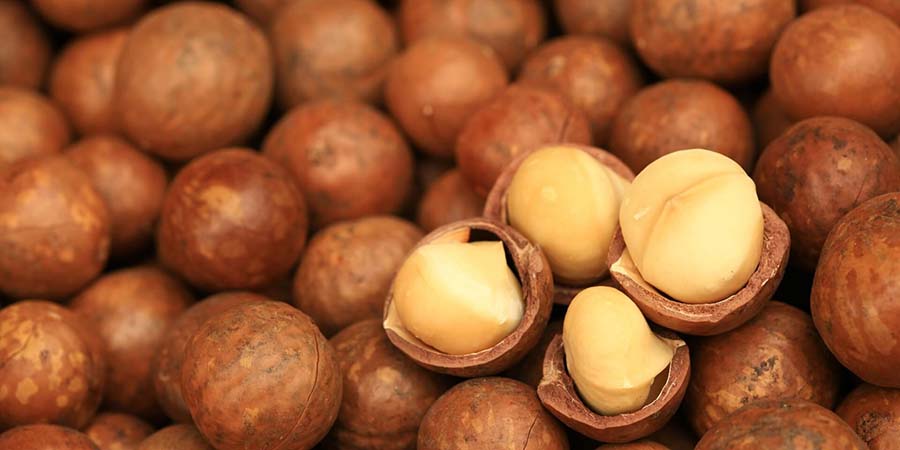
PHOTO CREDIT: AFA
Farmers and local leaders argue that Kenya should adopt a model similar to Australia and Zimbabwe, where in-shell and processed exports coexist under regulated quotas. Kirinyaga Senator Kamau Murango said such flexibility would protect both farmers and processors. “We can’t let nuts rot on farms while demand exists elsewhere,” he said.

However, the Agriculture and Food Authority (AFA) maintains that the export ban has curbed theft, improved quality control, and boosted local processing. “Exporting raw nuts undermines Kenya’s processed nut market in Europe,” said AFA Director General Dr. Bruno Linyiru, adding that local processing creates jobs and enables use of by-products such as shells for charcoal and organic fertiliser.
Agriculture CS Mutahi Kagwe has directed AFA to engage stakeholders in reviewing the current framework. The consultations are expected to explore a formula for limited exports while safeguarding local value addition, as thousands of farmers wait anxiously for relief.