
November 6, 2025

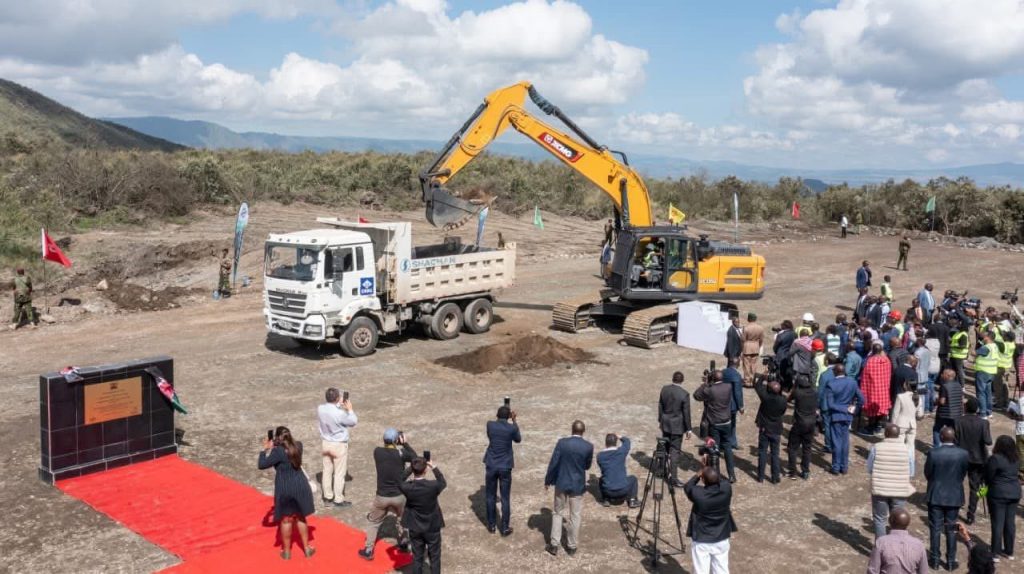
Kenya is taking a bold step towards self-sufficiency in fertilizer production with the construction of a geothermal-powered green fertilizer plant in Olkaria, Naivasha. Touted as the first of its kind in the world, the project is set to ease the country’s heavy reliance on imported fertilizer and bring more stable prices to farmers long battered by rising input costs.
The plant will be developed through a partnership between Kenya Electricity Generating Company (KenGen) and China’s Kaishan Group, operating locally as Kaishan Terra Green Ammonia Ltd. The facility is designed to run entirely on geothermal power, drawing 165 megawatts (MW) from KenGen’s Olkaria fields to produce up to 300,000 tonnes of ammonia-based fertilizer annually.
According to KenGen Managing Director Peter Njenga, the project will not only transform Kenya’s agricultural input supply but also demonstrate how renewable energy can drive sustainable industrialization.
“This is a critical step in using our geothermal resources beyond electricity. It positions Kenya as a global leader in green manufacturing,” Njenga said during the announcement.
Reducing Import Pressure
Kenya currently imports nearly all the fertilizer it uses, spending billions of shillings each year on imports from markets such as China, Russia, and the Middle East. This dependence has left farmers exposed to global price shocks and exchange rate volatility, which have contributed to fluctuating production costs across the agriculture sector.
Data from the Kenya National Bureau of Statistics (KNBS) shows that fertilizer imports fell slightly in the first half of 2025 to 443,701 tonnes valued at KSh25.6 billion, compared to 445,857 tonnes worth KSh27.7 billion in the same period last year. The government’s drive for local production, experts say, is meant to reduce this dependence and cushion farmers from external disruptions such as shipping delays in the Red Sea corridor.
Once operational, the Olkaria plant is expected to deliver an estimated KSh2 billion in annual net profit, while also cutting transport and foreign exchange costs tied to imported fertilizer.
A First in Clean Industrial Production
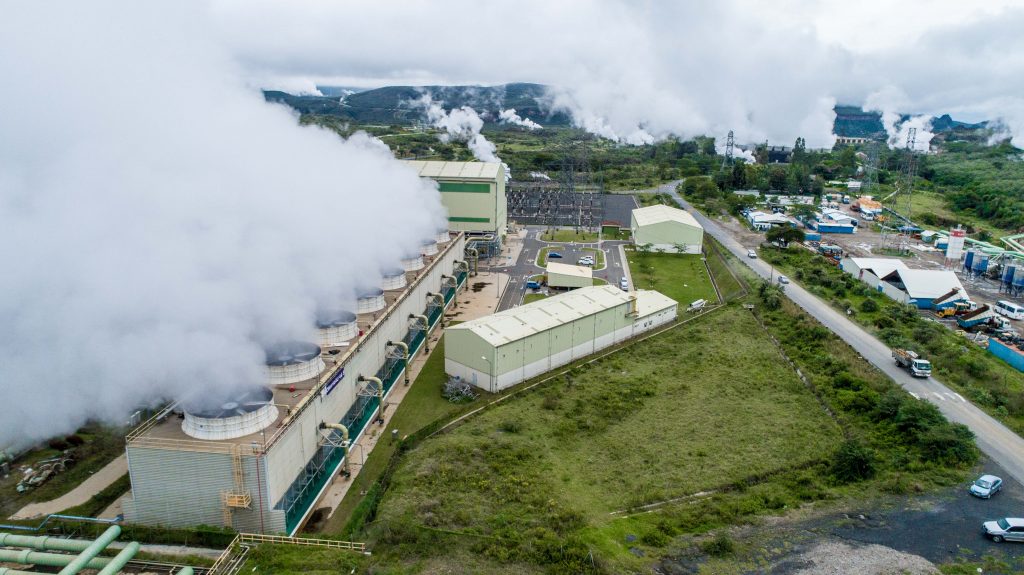
Unlike conventional fertilizer manufacturing, which relies on natural gas and emits significant carbon dioxide, the Naivasha facility will use geothermal steam and power to produce green ammonia. This approach is projected to offset up to 600,000 tonnes of CO₂ emissions annually, making it one of the cleanest fertilizer production systems globally.
President William Ruto, whose administration has prioritised energy transition and food security, hailed the project as a milestone in Kenya’s journey toward climate-resilient industrialisation.
“By harnessing geothermal energy, we are not only lowering the cost of fertilizer for our farmers but also contributing to global climate goals,” the President said.
KenGen, which already supplies around 40 percent of Kenya’s electricity from geothermal sources, is increasingly pivoting toward value-added ventures such as green hydrogen and ammonia production. Its latest financial results show a 54 percent rise in after-tax profit to KSh10.48 billion, signalling strong fiscal footing to support such diversification.
Economic and Social Impact
The project is expected to create at least 2,000 direct and indirect jobs during construction and operation, ranging from engineers and technicians to logistics and supply chain workers. Local businesses in Naivasha are also expected to benefit from increased activity in transport, hospitality, and services once the plant begins production.
Agricultural experts say the initiative could anchor Kenya’s broader fertilizer reform strategy, helping to stabilise retail prices that have swung between KSh3,500 and KSh6,500 per 50-kg bag in recent years.
If successful, the plant could also open up export opportunities for green ammonia and other by-products in East Africa, where demand for sustainable fertilizer solutions is on the rise.
Despite its promise, the project faces a number of hurdles. Establishing a fully geothermal-powered fertilizer plant is technically complex and capital intensive. Maintaining steady production will require reliable feedstock supply, efficient ammonia synthesis, and competitive pricing to rival imported products.
Analysts also caution that market uptake may depend on how well the new fertilizer matches the performance and affordability of imported brands that farmers are accustomed to. Government support through incentives or subsidies may therefore be crucial in the early years.
As Njenga summed it up, geothermal energy may yet prove to be “the bridge between Kenya’s green potential and its manufacturing future.”