
October 2, 2025
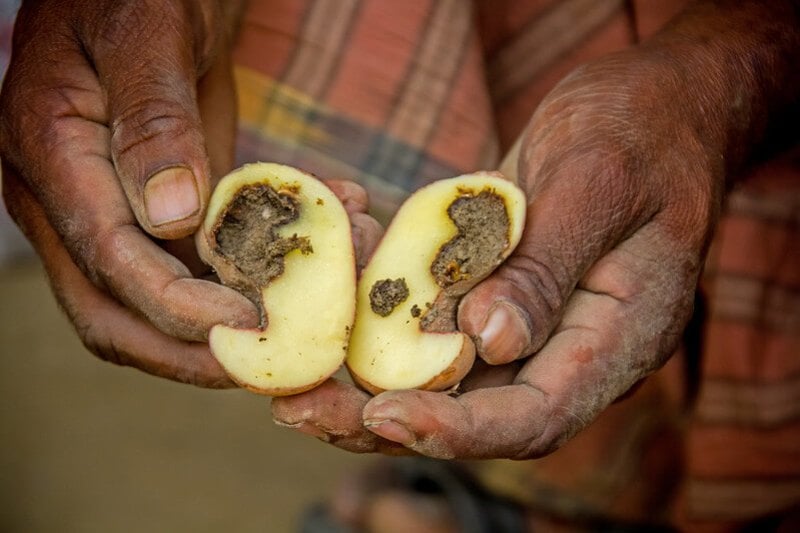
Researchers in Kenya are making significant progress toward combating food insecurity by developing genetically modified potatoes resistant to late blight, a devastating disease that can wipe out entire potato crops. This breakthrough, led by the Kenya Agricultural and Livestock Research Organization (KALRO), aims to provide farmers with a sustainable and safer solution, reducing reliance on costly and potentially harmful fungicides.
Late blight, caused by the pathogen Phytophthora infestans, attacks potato leaves, stems, and tubers, rendering the crop inedible and capable of spreading rapidly. Dr. Moses Nyongesa, a lead researcher, highlighted that unchecked late blight can cause yield losses of up to 30%, a significant blow to food production and farmer livelihoods. Globally, food security remains fragile, with 2.3 billion people; about 28% of the world’s population facing hunger as of 2024. The development of late blight-resistant potatoes could help mitigate this issue by protecting a critical staple crop in Kenya and beyond.
The innovative approach involves harvesting resistance genes from wild potato varieties naturally immune to late blight and engineering these genes into the commonly grown Kenyan potato varieties. After rigorous testing over two growing seasons in three diverse locations, these genetically modified potatoes have demonstrated strong resistance without compromising nutritional quality. This advancement means farmers will no longer need to apply toxic fungicides, which are expensive, environmentally damaging, and hazardous to human health.
Next steps include expanded trials involving more regions and public participation to ensure the potatoes’ resilience across different farming conditions. Upon successful completion, the Kenya Plant Health Inspectorate Service(KEPHIS) will review and approve the final release for farmers nationwide. If approved, this biotechnology potato could become a game-changer, enhancing food security, reducing chemical dependency, and promoting sustainable agriculture in Kenya.
This breakthrough aligns with broader global efforts to innovate staple crops capable of withstanding the increasing challenges posed by climate change such as extreme weather that threaten food production. Whereas the world grapples with growing food insecurity, genetically enhanced crops like this potato could play a crucial role in ensuring stable food supplies and improving farmer incomes without compromising environmental health.