
February 12, 2026

Flower farming is actively transitioning and adapting sustainable practices. Water and energy consumption for optimal production significantly contribute to production overheads.
For instance, inside De Ruiter East Africa’s fertigation unit, the system runs almost nonstop from early morning until evening, feeding crops, cleaning water, and maintaining the delicate balance required for high-quality flower production.
“This department uses a lot of power,” explains Vincent Mwendwa, who works in De Ruiter East Africa’s fertigation department. “The pumps run throughout the day because all the water used in the company has to be pumped.”
This constant motion translates into higher electricity bills.
The Hidden Energy Cost
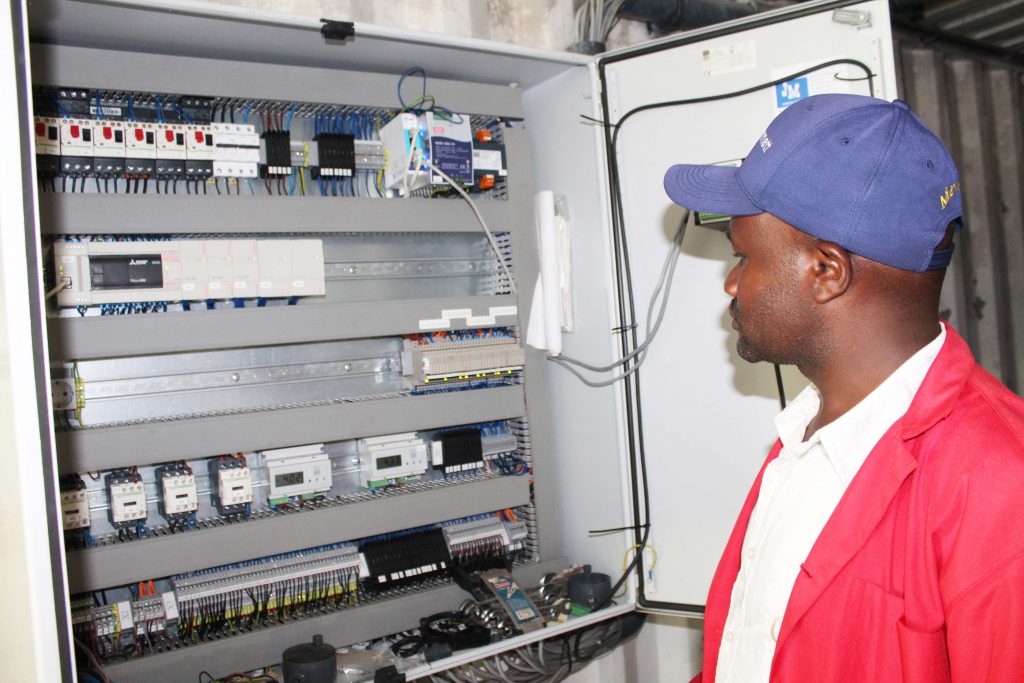
Fertigation, an essential process in modern floriculture, is energy-intensive. At De Ruiter East Africa, water is not only pumped but also treated, mixed, monitored, and delivered with precision across multiple crop zones.
Previously, the farm relied entirely on Geothermal Power from Oserian Power and electricity from Kenya Power. As production expanded and energy costs rose, the bills and inconsistency of supply became increasingly difficult to sustain.
The plan to go green and introduce solar power had been in the plans for some years but with power bills high and outages becoming more frequent DREA took the opportunity to review solar power supply options.
Fertigation means feeding crops through water, with the goal being precision, giving each crop exactly what it needs, no more, no less.
“We mix the nutrients with water in the required quantities for the crop,” Vincent explains. “Currently, we work with an EC of 2 and a pH of 5.8. Once you set the system, it automatically gives the right ratios.”
This precision ensures healthy crops while minimizing waste. Before nutrients are even added, water undergoes intensive treatment.
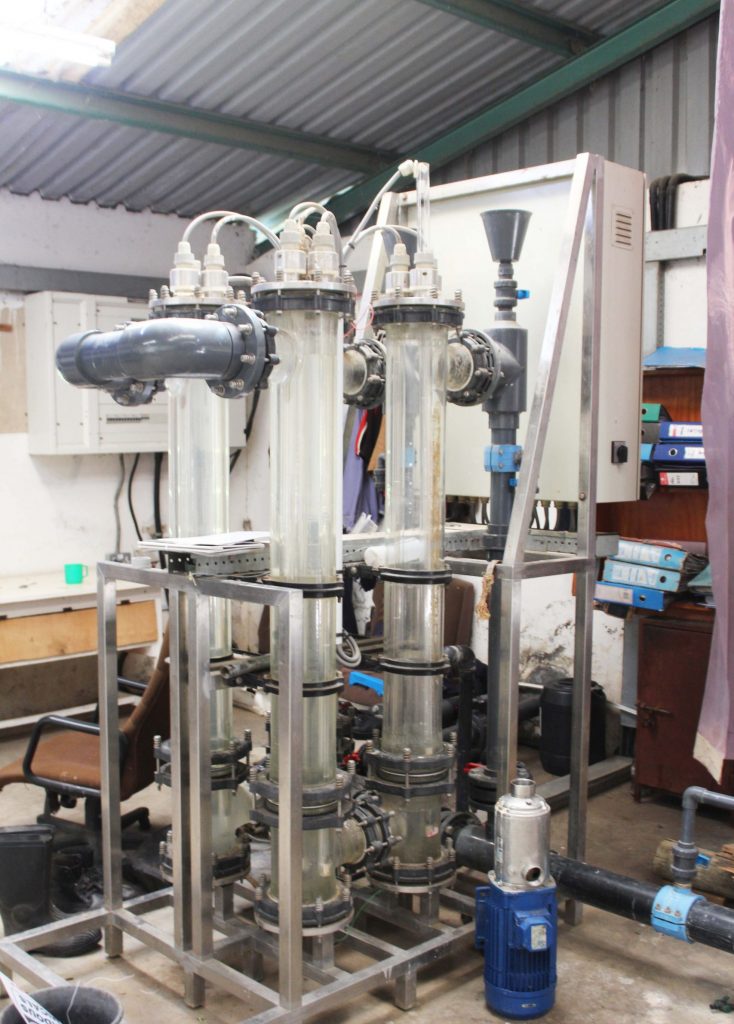
The farm uses an ultrafiltration (UF) system to clean water, removing nematodes and harmful organisms. The result is water clean enough not only for crops but also safe by human standards.
“When we clean the water, there are no organisms that can enter the system,” Vincent says. “Once it’s cleaned, it’s ready for use.”
The UF system runs continuously, adding another layer to the farm’s energy demand, but also reinforcing its commitment to plant health and food safety standards.
The Brain of the Operation: Inside the Priva System
At the heart of De Ruiter East Africa’s fertigation process is the Priva system, a computer-controlled platform that manages mixing, pumping, and distribution.
Water from the UF system flows into the Priva unit, where nutrients are added and ratios adjusted automatically. From there, the fertigated water is pumped into the fields through 28 programmed valves, each directing water to a specific crop zone.
“If you tell the system to send water to a certain valve, it does exactly that,” Vincent explains. “Afterwards, we take samples to confirm that what leaves the system is what the crop actually receives.” This verification ensures consistency and guards against system faults.
Going Green
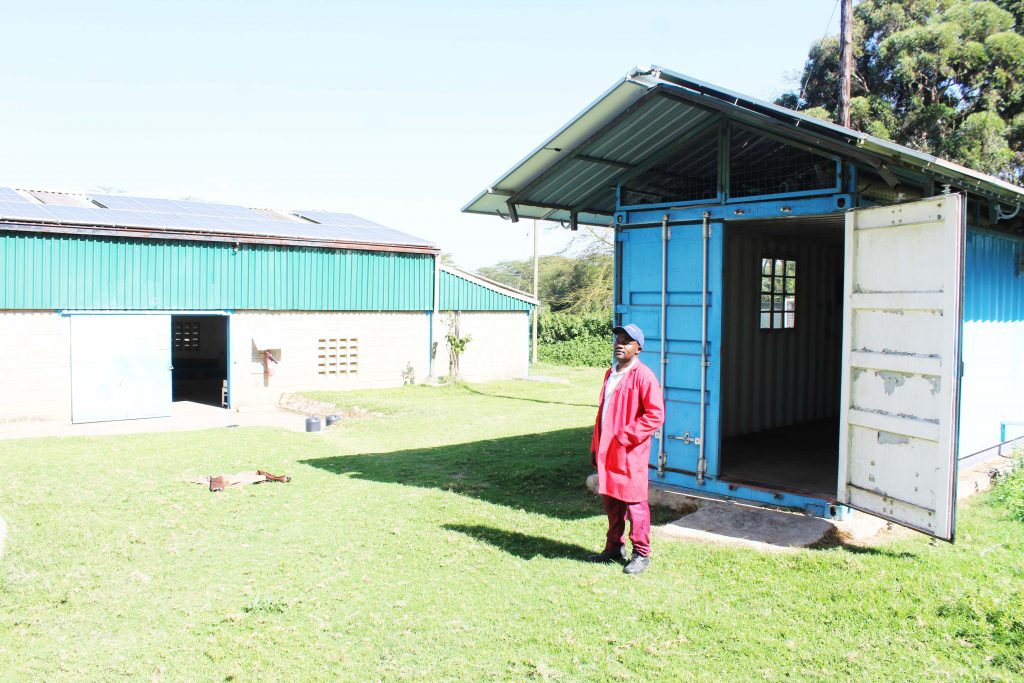
In 2022-2023, DeRuiter started transitioning from full grid electricity to solar power.
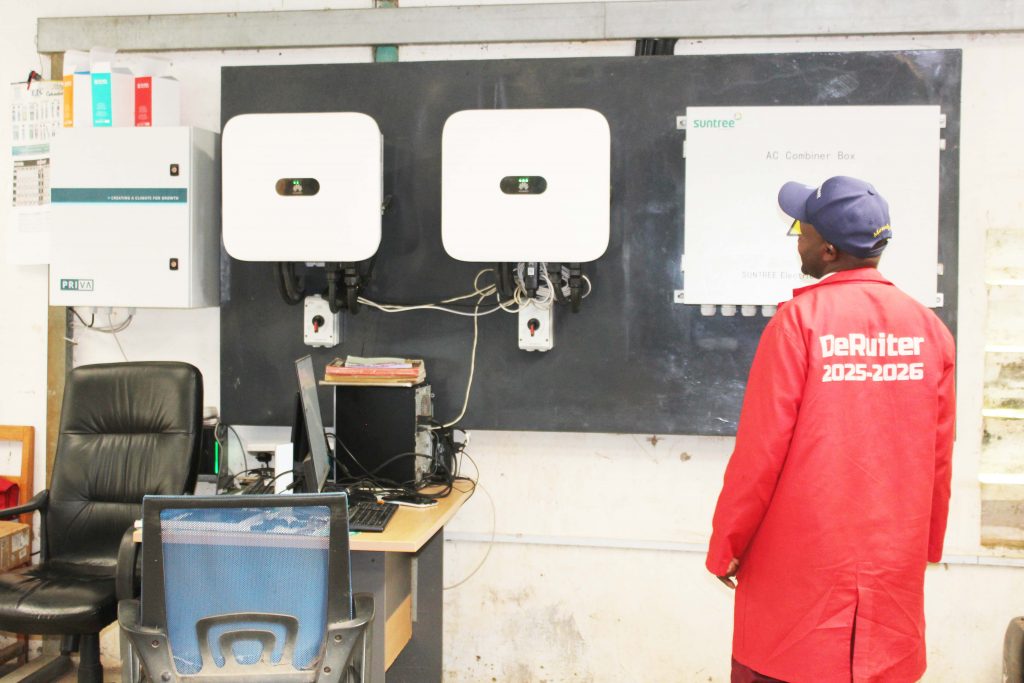
Rather than going completely off-grid, the farm adopted an on-grid solar system, allowing it to balance solar energy with grid power depending on demand.
“Our solar system works throughout the day,” Vincent says. “Since most of our operations happen during daylight hours, it fits perfectly.”
Before the transition, De Ruiter East Africa’s fertigation system consumed close to 7,000 kilowatt-hours, sometimes reaching 10,000 kilowatt-hours during peak pumping periods.
Since integrating solar:
- Daily consumption has dropped to 5,000–6,000 kilowatt-hours
- Solar now covers the bulk of daytime operations
- The grid only supplies the balance when solar output falls short
“If our load is 50 kilowatts and solar provides 45, then only 5 comes from the grid,” Vincent explains. “That balance has made a huge difference.”
“The efficiency is very good,” Vincent notes. “When solar is running, the machines are not under stress. Everything works smoothly.”
While De Ruiter East Africa is yet to install battery storage, the success of its on-grid solar system points to a future where renewable energy plays a central role in floriculture.
As energy costs rise and climate pressures mount, the farm’s experience offers a practical blueprint for others in the sector: sustainability is not just about environmental responsibility, it’s also about operational resilience.