 Freight, the taxation regime, and the EU plant health regulation were predicted to be the biggest challenges for the Kenyan floriculture in 2021, according to Kenya Flower Council’s (KFC) CEO Clement Tulezi. “When I was predicting that earlier in the year, I was not wrong. These three have remained the major challenges, and not much has changed since, unfortunately.” In this article, Tulezi goes over the current state of these challenges, as well as a new challenge the Kenyan flower industry is having to deal with and how Tulezi’s association is helping to find solutions and improvements.
20-25% of daily harvest thrown away
According to Tulezi, their top priority at the moment is freight. “In 2020, we temporarily lost demand for our industry, and the airlines found better business elsewhere because of Covid. As a result, the freight costs have gone up, and this situation has persisted. We are still short on capacity. There are still many cancellations. Almost every two days a flight to Nairobi is canceled, meaning that the capacity has not improved. The sector falls short of 1500 tons per week. As a result, the majority of growers and exporters are throwing away 20-25% of their daily harvest. Meanwhile, the demand for Kenyan flowers is good. These growers have invested a lot into their production, for which there is actually enough demand, but there is no space to transport it.”
In addition, the costs of transporting the Kenyan flowers have remained very high. “Moving produce from Nairobi costs on average $2,60 per kilo, whereas this only costs $1.50 for the Ethiopian market. When all other factors are held constant, how can the Kenyan market compete in the same market?”

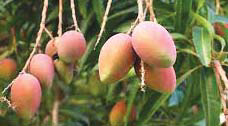 The Kenya Plant Health Inspectorate Service is training experts to help detect a new invasive mango mealybug pest.
 Brussels based multi-stakeholder initiative the Floriculture Sustainability Initiative (FSI) new and more stringent environmental and social criteria for producers was introduced. This criterion entailed enhancing the scope of the FSI Basket of Standards.
 “Trade rules tend to be taken for granted. However, without rules, there would be mayhem. A trading system that is based on rules helps ensure that flower trade flows as smoothly, predictably, and freely as possible.” The World Trade Organization recently posted a video in which they focus on rules-based trade in the floriculture industry. In her recent LinkedIn post, Sylvie Mamias, Secretary General of the international floriculture trade association Union Fleurs, discusses the importance of WTO’s focus on floriculture trade.
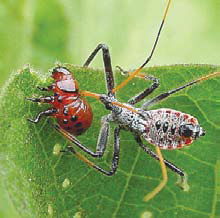 Insect monitoring forms an important part of integrated pest management programmes. It is crucial to identify pests accurately so that appropriate control measures can be taken. Insect traps are one way of observing the prevalence of insects.
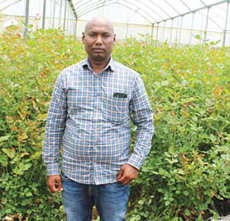 On the shores of Lake Naivasha, off North Lake Road in Kasarani area of Naivasha in Nakuru County lies a magnificent, well maintained farm with landmark, conspicuous greenhouses. Shalimar Flower Farm, a hotbed of horticulture thriving in Avocado and cutflower growing.
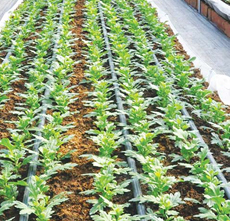 Fertigation is a widely used farming practice. The fertigation technique allows growers to save time, resources, and efforts by completing two events at a time: fertilization and irrigation. Customization of modern fertigation systems and innovative satellite-based software enable pinpoint variable rate fertilizer (VRF) applications. The most efficient method is drip fertigation that reduces inputs and delivers nutrients to the root zone. The technology is suitable for farm enterprises of any size since there are large and small-scale fertigation systems, with manual or fully automated control.
 When it comes to talking about disease-related issues in greenhouse crops, one point of confusion is often WHICH pathogens CAN be transmitted by water. Some are obvious – we all know Pythium is water-borne. But what about other culprits, like Fusarium or Erwinia? Should you worry about these in your recirculating water?
 Fungicides work by stopping or inhibiting fungal growth, sporulation or germination of spores. Different fungicides act on different stages of the fungal lifecycle and not all fungicides are effective against all fungi. Resistance occurs when a pathogen that was once sensitive to a fungicide is no longer sensitive (not controlled). Managing the use of fungicides and fungicide resistance in farms is important and can be achieved with planning.
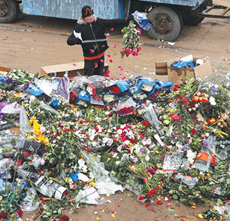 Flower farmers in Kenya are being forced to throw away a quarter of their produce due to a drop in airline traffic in the wake of restrictions imposed on rival carriers to protect Kenya Airways.