 If it is possible to learn from the mistakes of others, a moment has come for our parliamentary committees and the Ministry of Agriculture to take a good look at Sri Lanka. For, what better way to implement great policies than by seeing their impact beforehand?
And, as the Kenyan establishment continues to flirt with the idea of banning most of the country’s pesticides, it now has a full example of a country that did it. For, in April last year, Sri Lanka became the world’s first organic-only nation, by banning all agrochemicals.
So no one needs to argue anymore about what it does to agriculture stopping the medicines, the dips, the weed control, or the insecticides. Now, we can see it, as Sri Lanka handles a consequent and colossal food crisis. This is particularly important, as it clearly cuts no ice pointing out the obvious outcomes of slashing our agricultural production by an estimated 40%.
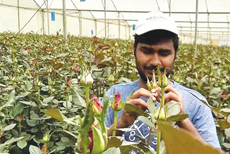
 Kenya prides herself of a blooming flower sector and partnered with fourteen (14) pavilions at Expo 2020 Dubai to distribute one million branded red roses this Valentine’s Day as the world celebrated love the Kenyan way: “From Kenya with love.”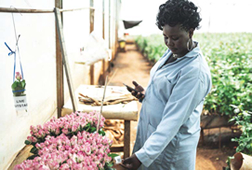

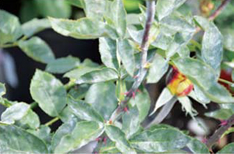
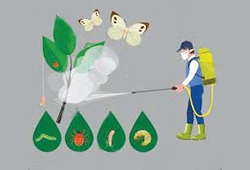
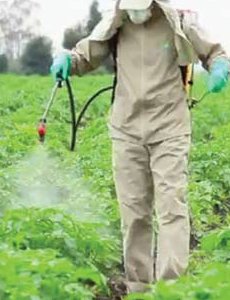 Pesticide resistance can become a problem when the same chemicals are used over and over to control a particular pest. After a period, the pest may develop resistance to a chemical so that the chemical no longer effectively controls the pest at the same rate, and higher rates and more frequent applications become necessary until eventually the chemical provides little or no control.
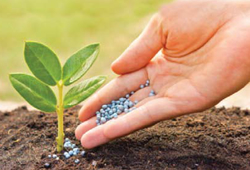
 Plant nutrition is the study of the chemical elements and compounds necessary for plant growth, plant metabolism and their external supply. Without proper plant nutrition, plants tend to die off or produce little or no yield.