
 About two million Kenyans are food insecure. In Nairobi, up to 20 per cent of the population is ultra hungry, researchers tell us. Farmers responsible for feeding the country are still struggling with access to seeds, government subsidized agro inputs, diseases and pests and emerging threats like climate change.
Ironically Kenya is endowed with large swathes of green fertile land, favourable climate and a highly entrepreneurial population with institutions like the Food and Agricultural Organisation classifying the country’s land as so verdant, so lush and so capable of generating food that it could, alone, be the agricultural supply station for most of Africa. The World Bank on the other hand through numerous studies shows Kenyan farmers among the most important in developing countries capable of creating a trillion-dollar food market by 2030 if they expanded their access to more capital, better technology, irrigated land and grow high-value nutritious foods.
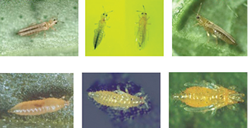 Thrips, order Thysanoptera, are tiny, slender insects with fringed wings. They feed by puncturing the epidermal (outer) layer of host tissue and sucking out the cell contents, which results in stippling, discolored flecking, or silvering of the leaf surface. Thrips feeding is usually accompanied by black varnishlike flecks of frass (excrement).
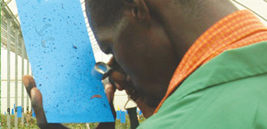 The crop protection industry is dominated by the large multinational agro-chemical companies such as Syngenta, Monsanto and Bayer Cropscience. The biocontrol business is minute in comparison, with only 3% of global sales of crop protection products. The future of the biocontrol industry is based on a range of interacting factors and difficult to predict the future, however many are suggesting that its future is likely to grow. There are numerous drivers for the use of biological control.
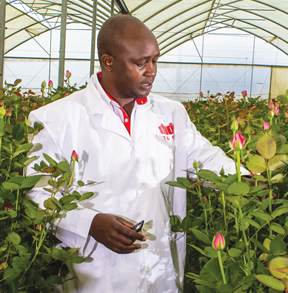 Briefly discuss Barnaba Rotich (Background-Personal and a professional)