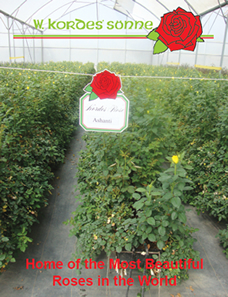
 Kenyan roses are ranked among the best in the world and this is usually due to the high quality varieties produced by rose breeders with local branches. One such branch is Kordes Roses East Africa situated in Karen, Nairobi and managed by Mr Bas Smit. This is a branch of W. Kordes Söhne based in Hamburg, Germany, which celebrated its 125th Anniversary two years ago. They have branches located in the cut flower production centres of The Netherlands and Kenya, as well as agents located throughout the world. Kordes’ novelties are tried and grown under local conditions and test marketed in the world’s flower markets.
W. Kordes Söhne is a world renowned company in Northern Germany with a tradition of more than 100 years in the hybridization of new rose varieties and in the production of rose plants. Many of the most famous cut rose and garden rose varieties have been created in the facilities of Kordes. An international team works continually on the development of new varieties and the optimization of the production of young plants.
In order to determine the response of varieties under the different climatic conditions of the rose producing countries of East Africa, a large quantity of both standard and new varieties are cultivated in the Kordes’ green house near Nairobi. Results gained from those local trials enable the `Kordes Rose East Africa’ team to offer competent advice on the propagation and cultivation of Kordes varieties. In a bid to keep in touch with client needs and to expose them to new improved rose varieties, Kordes Roses organizes Open Days at their Karen Testing facility. Participants are taken on a guided tour of the breeding facility by Kordes officials.
 The GreenCHAINge consortium, made up of trading companies and research institutions, was satisfied with the results of the first sea transport of roses in 2014. The practical test involved transporting both large and small-flowered roses between the port cities of Mombasa and Antwerp. Conditions in the air-conditioned reefer containers (such as the required low temperature and relative humidity) were controlled remotely.
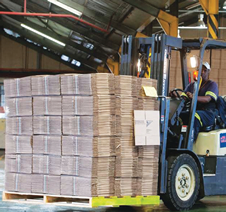 The company provides a total packaging solution from design to delivery, with products ranging from small pizza boxes to large flower cartons.
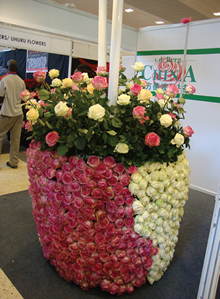 It’s yet another season for horticulture stakeholders and its affiliates. The rare occasion looks ‘glossy green and rosy scented’ but only for the sake of business attributed to the fast growing and highly lucrative floricultural sector.
 Briefly discuss Harry (background-personal and as a grower to current position General Manager Sunland Flowers)
 When I first visited Preesman’s new show case at Thika, it was on invitation of Jelle Posthumus, the commercial manager, Preesman. I met a team honoured to satisfy the curiosity of their customers who kept on tripling every minute courting for their attention. By count I could not tell the number of times they walked in to the new show case with a different customer then back to the reception area for either continual discussion with the same client or for a fresh discussion with a new client. On a close follow up, I realized that inside the show case was more technical and less commercial whereas in the reception was more commercial and less technical. These men had a wide knowledge of the two worlds of rose breeding. In between the customers, I stole some few minutes and managed to get a few minutes of interview with several of them.
 For many years, Dutch Flower Group (DFG) has been active in Africa and especially in Kenya, with respect to sourcing African products, like roses and carnations, as well as other varieties of cut flowers and foliage.
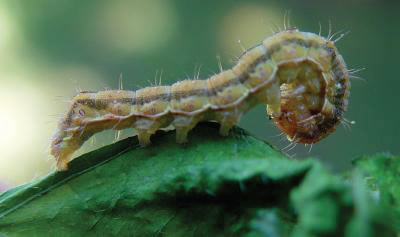 Caterpillars are seasonal pests to the flowers but when in season result in major losses to the flower industry as one caterpillar can cause damage to more than one flower. In flowers there are different kinds of caterpillar species which include helicoverpa armigera and spodopteraexigua and thus it’s important to know the exact pest that one has in their crop and out of these two, the helicoverpa species is the notorious and listed as a notifiable pest in the European market.
 The International Flower Trade Expo (IFTEX) now enters its third year in Nairobi, Kenya, with high expectations on both quality and quantity from the organizers, exhibitors and visitors. The show, which debuted in March 2012, is quickly developing a magnetic pull for the flower industry fraternity not only in Africa but the world over.