
How the Kenyan flower industry thrives in the absence of formal contracts. Based on the research of Rocco Macchiavello and Ameet Morjaria.
Yevgenia Nayberg
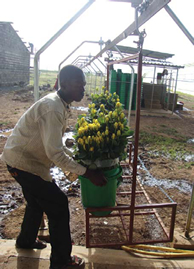 Operating a business in a developing country is not always for the faint of heart. But new research suggests that long-term relationships between buyers and sellers can go a long way toward overcoming obstacles like political instability and weak governing institutions.
To build his case, Ameet Morjaria, an assistant professor of managerial economics and decision sciences at the Kellogg School, turned to the rose trade in Kenya—a thriving industry that he says has “managed to set up a supply line to the developed world. And they’ve achieved this in a relatively short period.”
Just how healthy is the rose industry in Kenya? Today, an estimated 500,000 Kenyans on over 100 flower farms depend on the trade for their livelihood. The nation’s flower exports have grown from about 11,000 tons in 1988 to more than 136,000 tons in 2014, making Kenya the third-largest exporter of cut flowers in the world. Many of these flowers head to the European Union, where they account for about a third of all flower sales.
The rose trade’s rapid growth has been driven by Kenya’s sunny climate, low labor costs, and strong air-transportation links to Europe. And this has all been done in the absence of formal contracts. Since flowers are highly fragile and perishable, contracts would be unenforceable, with buyers and sellers making claims that no court could verify.
 After climbing one great hill, one only realizes that there are many more mountans to climb. This old adage attributed to one of African great rings true in agrochemicals. The past few decades have seen the rise and spread of different diseases in greenhouse farming. One man has seen it all, Mr. Anthony Songoro, Crop Manager, Floriculture and Industrial Crops Bayer Crop Science a trained horticulturalist with both agrochemical and production experiences. Before joining Bayer Crop Science two years ago, he was a grower for seven years. Mr. Songoro prides himself with a wealth of experience in biologicals. To many he is a guru in the flower industry. Recently, Floriculture Magazine caught up with him after giving the key presentation in Luna Tranquility Launch and in a relaxed atmosphere, he gave an interesting interview, Excerpts.
 Founded in January 2013, Fresh From Source (FFS) is becoming a well-known young company in the flower industry. With our experienced team based in the Netherlands with representativesin Kenya, (Nairobi) and Zimbabwe (Harare), we are able to supply fresh flowers from Africa all over the world.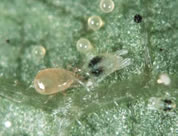
 I clearly remember the advice given to me when I was toying with the idea of becoming a scribe. “Don’t take up journalism as your career if your sole aim of life is to make money. In scribing you only earn a name but not money,” my mentor told me. He Quoted Somerset Maughan and said, “Money is the sixth sense without which we cannot enjoy the other five to the full! Even allowing for the sort of ostentatious life, anything in excess is just adding zeros to one’s bank balance and gloating over bloated bank statements every month.
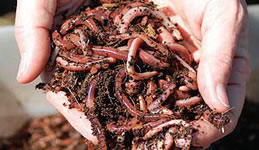 Rising cost of farm inputs in the country has seen some leading flower farms in the country rethink other innovative ways of cutting chemical based fertilizers cost in a sustainable and environmentally friendly way.