
Introduction Powdery mildew is a fungal disease that affects a wide range of plants. Powdery mildew diseases are caused by many different species of fungi
Author: admin
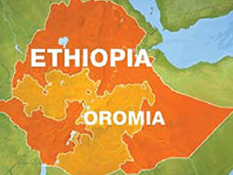 2016 has been a very tough year for Esmeralda Farms. Last June, Peter Ullrich, founder and driving force behind one of the largest floricultural companies in the world, passed away. In August, their farm in Ethiopia was attacked by rebels. Present owner Clarisse Ullrich decided subsequently that Esmeralda would cease their activities in Africa. And the office in Aalsmeer, the Netherlands, was shut down as well. In the beginning of December, Clarisse Ullrich tells her story.
“For many years, Clarisse Ullrich supported her husband Peter Ullrich with his business and since he passed away, she’s taken over the leadership of what might be the largest flower company in the world: Esmeralda Farms. She had only assumed her new position for two months, when Esmeralda’s farm in Ethiopia was raided by rebels. Following the events, Clarisse Ullrich was faced with having to make hard decisions.
This meant that Esmeralda’s African adventure, which had started a year and a half earlier, was over. They had initially started supplying their European customers (through Esmeralda’s Dutch branch in Aalsmeer) gypsophila and spray roses from Ethiopia, because it was cheaper than from Latin America. But this strategy was suddenly abandoned last September after several Ethiopian flower companies, including Esmeralda, had become a target of tribal fights, despite the fact that Ethiopia had been such a stable place for floricultural companies before.
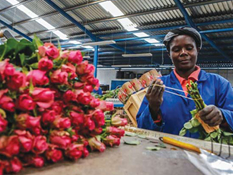 The Kenyan flower industry has been spared decline thanks to a permanent Market Access Regulation between the EU and Kenya. Union Fleurs and the Kenya Flower Council’s great efforts have contributed to the import duty exemption currently in place for Kenyan flowers exported to the European Union since 1 October 2016.
For a long time, the future was looking very bleak for the Kenyan flower industry. Kenya desperately needed the East African Community (EAC) to sign the Economic Partnership Agreement (EPA) with the European Union (EU) before the 1st of October. Without this EPA, the country was the only one of the five EAC countries that was going to have to pay European import duties on flowers and other products.
The other four countries – Burundi, Rwanda, Tanzania and Uganda – were already exempt from European import duties as they were categorised as ‘least developed countries’. But Kenya wasn’t. Because the five countries had agreed during the EPA negotiations (in 2008), that an EPA agreement could only be reached if all five countries signed and ratified the EPA, Kenya was getting very anxious when the deadline of 1 October 2016 was starting to get closer. In September, only two countries had signed: Kenya and Rwanda.
By Jose Chen Lopez Plants require light for optimum growth and development, but the three different aspects of light, quantity, quality and duration, also have
Horticultural Trade Follows the Overall Political Situation
 Horticulture is showing that it is largely stable and optimistic in spite of the many economic and political uncertainties on the markets. Notwithstanding Brexit, the embargo on Russia and terrorism, the flower and plant worlds are continuing to revolve even if not always in the traditional orbits.
The characteristics of the last few years in the global trade continue to exist. The worldwide demand for flowers and plants is concentrated in the European countries, China, Japan and the USA. The Netherlands remain the undisputed number one as the hub for the trade inside the EU. They are responsible for almost 70 % of the export activities of flowers and plants inside the EU. As indicated by the latest figures from EUROSTAT, the trend towards rising imports of flowers and plants into the EU is persisting as far as both the quantity and the value are concerned.
In 2015, a total of 504,952 tonnes (+ 8.2 %) worth Euro 1.68 billion (+ 5.3 %) was imported by the EU. As in the previous years, the cut flowers which account for 78 % of the total imports into the EU are mainly responsible for the rise in the imports. At 5.3 %, their growth in terms of value exactly corresponds to the total growth. The increases in the imports may be attributed almost exclusively to the cut flowers; cut flowers are the sole driving forces behind the growth in the EU’s foreign trade.
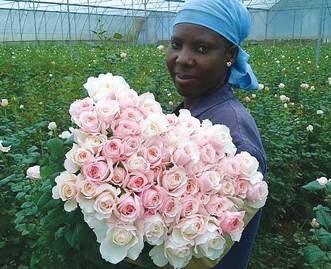 Kenya will continue enjoying duty-free and quota-free access for its goods to the European Union (EU) even if neighbouring countries fail to approve the Economic Partnership Agreements (EPAs).
Josiah Rotich, the chief trade development officer at the Trade ministry, said that Kenya will, however, not enjoy other benefits that come with the EPA until all East African Community (EAC) partners ratify the deal.
Among the benefits that will remain pending is the rules of origin, a provision that allows Kenyan exporters to enjoy dutyfree access to the European market despite their goods being made using raw materials sourced from other countries.
“On the basis of Kenya ratifying the agreement, the country will continue benefiting from the duty-free, quota-free access for as long as we are still trying to sort ourselves out at the EAC level,” Mr Rotich said during a roundtable meeting organised by the Institute of Economic Affairs (IEA).
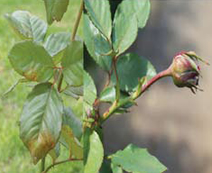 Rose growers have a relatively benign group of insect pests to deal with and so focus most of our pesticidal attention on the fungal disease — powdery mildew — that seem to bedevil us on a yearly basis. However, every few months, we are confronted with a far more virulent fungicidal invader known as downy mildew. Downy mildew is a fairly common term as far as plant diseases go.
Downy mildew disease poses an increasing problem in the horticultural industry causing serious losses in many floricultural and greenhouse crops.Downy mildews present a challenge to growers both because the disease can be present but not obvious; and because they are difficult to control with fungicides once established. The pathogens are very different from Powdery Mildews- they attack different plants under very different environmental conditions, and are controlled by different classes of fungicides. Downy Mildew diseases are caused by a group of fungus-like organisms: they are not true fungi, and are similar to Pythium andPhytophthoraspecies. Most of the Downy mildew fungi are host specific and infect only one plant family.
Regional Briefs Zimbabwe: Cut Flowers Export Down by 95%Zimbabwe’s exports of cut flowers declined by 95% to $3,1 million in 2015 due to the stringent
If you improve safety, at the same time you also improve product quality and product and process efficiency. Top quality is every grower’s trademark. Safety
Peat is the most common material used in plant growing media, but have you ever thought about what peat really is? Organic Growing Medium Made