Unless the two bickering parties in this messy divorce reach an agreement bringing about some less disruptive arrangement, goods travelling across the channel are likely to confront customs
Summary
- The European Union has a trade agreement with Kenya that enables imports of flowers free of tariffs.
- After Brexit, Britain will have to negotiate its own arrangement with Kenya and other exporters.
- Until a deal is struck, flowers sent from Kenya to Britain would stand to incur tariffs of nearly 7 percent, a potential shock for an industry that has become a major source of jobs in the East African nation. checks and sanitary inspections.
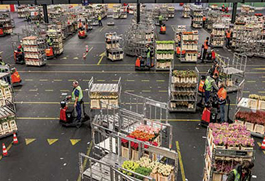 Far removed from the political posturing and brinkmanship that capture most of the attention in Britain’s long and tedious departure from the European Union, Yme Pasma is deeply enmeshed in the mother of all logistical problems.
He is the chief operating officer of Royal FloraHolland, a marketplace where some 12 billion flowers and plants are sold a year — more than one-third of the worldwide trade in such blooms. Inside hulking warehouses near Amsterdam’s Schiphol airport in the town of Aalsmeer, Royal FloraHolland operates a flower auction and a distribution centre.
A fleet of computer-guided forklifts whisks buckets of roses, boxes of amaryllis and other foliage — some grown in Holland, some flown in from Africa, Asia and Latin America — toward loading docks, to be placed on trucks and shipped to customers worldwide.
The scent of flowers is pervasive, a weirdly anomalous whiff of perfume amid the clatter of machinery.
Nearly $1 billion worth of this product a year is destined for the United Kingdom, a realm that today is still part of the European Union. Flowers arriving from outside Europe can clear customs and then proceed unhindered to Britain.
 In spite of optimism and excitement after national carrier Kenya Airways (KQ) started direct flights to the US in October, the airline’s business strategy of focusing on passengers as opposed to cargo has dashed the hopes of the flower industry of targeting the market that has remained elusive.
 IFTF 2018
 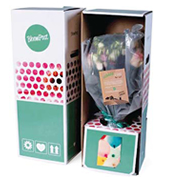 Sustainable packaging is no longer a term for the future. It’s the current state of corporate responsibility and package designs. You can view the concept as an excellent investment not only for the environmental benefits but also as a powerful tool to improve your clients’ sentiment towards your brand.
 You’ve probably heard the widely-quoted factoid that the majority of food waste happens in the home. From grocery over-purchasing to over-zealous expiration dates to just plain forgetting to cook that cabbage you bought, it’s not exactly a surprise that the kitchen is where a lot of needless wastage takes place.
 While the ideal of integrated pest management has been pursued and adopted in a variety of settings since the mid-20th century, recent trends point to perhaps too great a focus on killing pests rather than managing host stress. In a new paper in American Entomologist, three experts suggest a modified focus that better accounts for evolution and tolerance to pest injury and shifts from control toward management.
 Flowers are the perfect gift for someone close to the heart but geographically distant, i.e. theoretically an ideal e-commerce market.