In recent years, the Russian government has made self-sufficiency a top priority. This has already resulted in a large number of new greenhouse projects for vegetable cultivation. But also in flowers and plants, Russia aims to become less dependent on imports. That’s not all bad news for foreign companies, however. The expansion of domestic growers opens up opportunities for suppliers from other countries, while Russia’s increasingly affluent population drives up demand for flowers and plants, both from within the country and abroad.
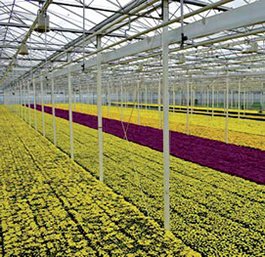 It’s not just vegetable greenhouses that are popping up across the country – Russian ornamental growers are doing good business too, expanding for the sake of self-sufficiency. For instance, a new greenhouse in Saint Petersburg is to meet up to 60% of the city’s demand in flowers for flowerbeds. A few months later, in June 2018, construction of a tulip greenhouse near Smolensk was announced. Other recent expansions include a rose greenhouse in North Ossetia, while a rose grower near Moscow just announced a 6 hectare expansion.
These are just a few examples that show how the flower business in Russia is stabilizing – a development also noticed by the organizers of the annual FlowersExpo, who are seeing an increasing number of domestic participants.
Opportunities for suppliers
These expansions offer chances for suppliers. One such supplier, Schneider, is seeing constant growth in the Russian market. As Zsófia Simó, marketing & communication specialist at the company,said: “Russian growers always strive to expand their businesses and Schneider youngplants is happy to provide valuable knowledge and advice in order to allow them to reach their goals.”
This sentiment was echoed on the trade show floor, where it became apparent that several growers were expanding or planning to expand their greenhouses. In turn, the breeders at the show also reported seeing an increasing interest for their varieties from the Russian growers.

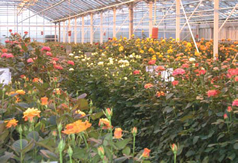 Luckily, consumers are starting to request more information on where and how their flowers were grown and who grew them. Most of the Kenyan growers welcome this paradigm shift.
 As Britain prepares to leave the European Union, workers in Kenya’s flower industry are closely monitoring developments. Flowers are big business in Kenya and earnings from exports have doubled in the past five years. A key export destination is the UK, which most of the flowers enter after being auctioned in the Netherlands. Growers and exporters in Kenya are asking the same question – what impact will Brexit have on the flower trade?
 State-owned Ethiopian Airlines Enterprise is evaluating freighter flights through Miami — the main entry point for U.S. flower imports — Los Angeles or New York, regional manager Girum Abebe said in an interview. The company currently transports stems there only in the bellies of passenger jets.
 What is your personal back ground?
  Panalpina has doubled its cold storage space at Nairobi’s Jomo Kenyatta International Airport, with the aim of growing the perishable volumes flown out of Kenya. The facility has been expanded by 1,500 m2 and offers Jomo Kenyatta International Airport’s only dedicated loading bays for skidded or palletised cargo and with separate cold rooms to manage specific temperature requirements. Panalpina aims to grow its business in Kenya from the current 65,000 tons of flowers, fruits, and vegetables it moves, to more than 80,000 by 2020.