
February 12, 2026
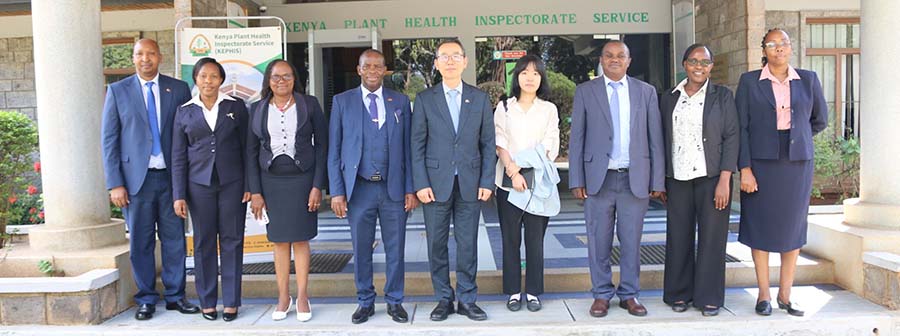
The Kenya Plant Health Inspectorate Service (KEPHIS) last week hosted H.E. Kang Hyungshik, Ambassador of the Republic of South Korea, for a courtesy visit at their headquarters in Karen. The meeting, attended by KEPHIS Managing Director Prof. Theophilus Mutui, Director of Phytosanitary and Biosecurity Dr. Isaac Macharia, and senior officials from the phytosanitary department, marked a significant step in strengthening bilateral cooperation in agricultural trade.
During the discussions, both parties focused on enhancing market access for Kenyan horticultural exports, particularly fresh avocados and cut flowers, such as roses, to South Korea. The dialogue underscored the strategic role of KEPHIS in safeguarding plant health, ensuring adherence to international phytosanitary standards, and promoting safe trade practices.
“KEPHIS continues to play a critical role in assuring global markets of the safety and quality of Kenyan produce,” said Prof. Mutui. “Our efforts support growers and exporters by opening new market opportunities while maintaining Kenya’s reputation as a trusted supplier of premium horticultural products.”
The visit provided a platform for Kenya and South Korea to explore avenues for collaboration in agricultural trade, emphasizing the mutual benefits of strengthened regulatory cooperation. Both sides expressed optimism that these engagements would boost exports and strengthen economic ties between the two countries.
As Kenya continues to expand its footprint in global horticultural markets, initiatives like these are key to ensuring compliance with international requirements, building trust with overseas buyers, and supporting the livelihoods of farmers and exporters across the country.
| FAQ |
|---|
| How big is the South Korean market for Kenyan avocados? Currently, the market is emerging. South Korea imported around USD 1 million worth of Kenyan live plants and cut flowers, including some avocado shipments, indicating room for growth. How big is the South Korean market for Kenyan roses? The South Korean market for Kenyan cut flowers is a growing, albeit relatively small, niche compared to Kenya’s dominant European markets. In 2024, South Korea imported approximately $25.16 million worth of cut flowers, live trees, and plants from Kenya. Why is South Korea considered an important market? Though small currently, South Korea represents a strategic emerging market. Strengthening trade ties can diversify Kenya’s export destinations and open new growth opportunities for farmers and exporters. What are the characteristics of the South Korean cut flower market? Highly reliant on imports due to a shrinking domestic flower farming sector. The number of flower farms in South Korea halved between 2001 and 2017, increasing demand for imported flowers like those from Kenya. |