
January 29, 2026
Valentine’s Day has become less of a seasonal rush and more of a logistics test. For Kenya’s flower industry, the question is no longer whether farms can produce enough flowers, but whether the air cargo system can carry them to market at the right time, in the right condition, and at a sustainable cost.
Production for the 2026 season is broadly encouraging. Growing conditions in Kenya and Ethiopia have supported healthy crop development, reinforcing Kenya’s position as one of the world’s most dependable flower origins. With exports exceeding 102,500 tonnes in 2024 and foreign exchange earnings of approximately KSh 108 billion, the sector continues to anchor the country’s horticultural economy.
Yet production strength alone does not guarantee market success. Temperature volatility is slowing crop cycles, with hot days and cold nights extending growth periods and shifting harvest timing. This creates operational pressure as exporters attempt to align supply with tightly defined peak shipping windows. The industry is therefore managing not a shortage of flowers, but a narrowing margin for error.
Demand remains firm across core destinations. Europe, the Middle East and parts of Asia continue to show stable to moderately increasing order volumes, with Valentine’s Day, International Women’s Day and regional festivities overlapping in quick succession. This compression of demand concentrates pressure on transport capacity rather than on farm output.
Air freight remains the defining constraint. Capacity to the Middle East and Far East has not expanded in line with seasonal volumes, while pricing continues to rise as demand intensifies. Europe remains relatively balanced, but on other routes, securing space has become increasingly relationship-driven and dependent on early commitment. For buyers, this means that availability is not only about supply, but about how effectively logistics space has been secured upstream.
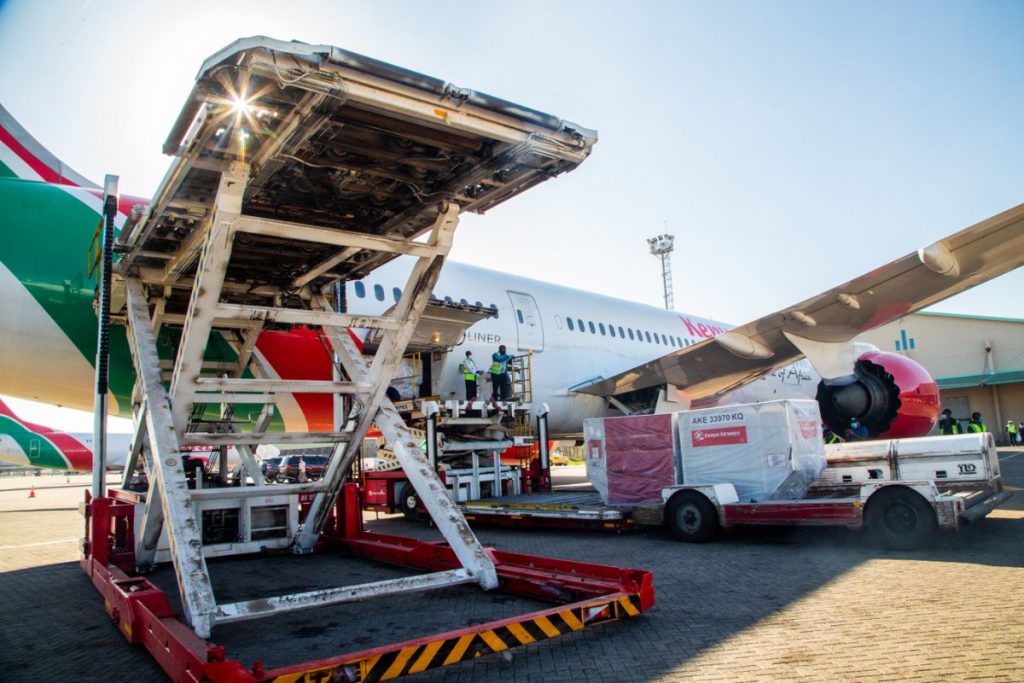
Airport performance is equally decisive. Jomo Kenyatta International Airport is the central gateway for Kenya’s flower exports, and during peak weeks it operates at the limit of its handling capacity. Even minor disruptions can ripple through the system, affecting uplift schedules, temperature control and shipment integrity. In this environment, coordination is not a competitive advantage; it is a necessity.
Export models respond differently to these pressures. Growers such as Lenana Flowers, specialising in chrysanthemums, benefit from a more resilient product that can tolerate extended cold storage. Combined with FOB commercial terms, this reduces exposure to downstream freight volatility. Valentine’s Day represents a moderate increase rather than a dominant production peak, with stronger demand later driven by Middle Eastern holidays.
In contrast, rose exporters such as Karen Roses operate under tighter time sensitivity. While air freight remains essential, limited sea freight volumes to Europe are being cautiously developed where cold chain performance can be guaranteed. This demonstrates that modal diversification is technically feasible but commercially dependent on buyer commitment to stable, high-volume programs.
Sea freight is not a tactical solution; it is a strategic one. It requires changes in varieties, production planning and long-term contracting. Without predictable demand and shared risk, growers cannot justify the transition. This reinforces a central truth of peak-season logistics: meaningful change must be driven jointly by producers, buyers and logistics providers.
From the logistics provider’s perspective, Valentine’s is won months before February. Capacity is secured early, airlines are diversified, and routes are planned with contingencies built in. The market reality is clear: a reliable, pre-allocated space at a slightly higher rate is more valuable than an uncertain low-cost booking. In a time-sensitive product category, delivery certainty defines commercial value.
Execution discipline completes the equation. Rapid farm-to-airport transfer, strict temperature management, continuous monitoring and clear escalation procedures protect product integrity. Specialist perishables teams, not general cargo operations, are critical to navigating peak volumes effectively.
For buyers, Kenya offers a compelling proposition: scale, consistency, product diversity and growing logistics sophistication. However, peak-season performance increasingly depends on planning quality and supply chain alignment. Valentine’s Day has evolved into a precision exercise where forecasting accuracy, capacity security and operational discipline determine success.
Strong production creates opportunity. Tight lift defines the outcome.