
November 27, 2025
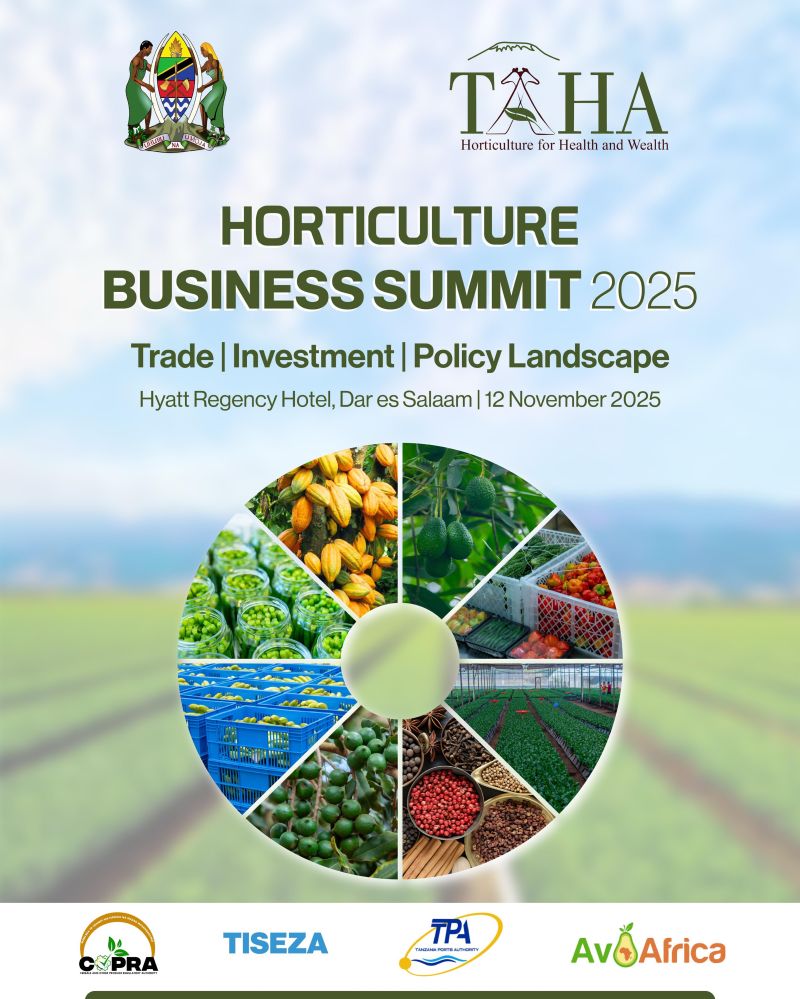
Tanzania’s horticulture sector is taking centre stage this week as the inaugural Horticulture Business and Investment Summit gets underway in Dar es Salaam. The two-day event, running from November 12 to 13, has drawn more than 400 delegates from across the region and beyond.
Organized by the Ministry of Agriculture in partnership with the Tanzania Horticultural Association (TAHA), the summit marks a major step toward positioning horticulture as a driver of investment, innovation, and export growth. Officials say the forum is set to become an annual platform for shaping the future of one of Tanzania’s fastest-growing agricultural sectors.
Growing at a robust rate of about nine percent annually, Tanzania’s horticulture sector encompassing fruits, vegetables, and flowers, is fast emerging as a critical engine for economic growth, employment, and foreign exchange earnings. Current export earnings from horticultural produce stand between $570 and $600 million but the government and industry players collectively target a milestone of $2 billion in exports within the coming years, signaling a concerted push to capitalize on burgeoning global and regional market opportunities.
“The summit offers an invaluable platform for dialogue among government, investors, and industry players to review achievements, tackle investment barriers, and build strategic partnerships for accelerating sector development,” said Gerald Mweli, Permanent Secretary at the Ministry of Agriculture. Among the attendees will be five permanent secretaries from diverse ministries, reflecting the government’s high-level commitment to advancing the horticulture agenda.
TAHA’s CEO, Jacqueline Mkindi, highlighted the meeting’s role in capacity building and fostering collaboration, emphasizing the need to adopt modern technologies and improve market access to sustain growth. This aligns with Tanzania’s broader agricultural objectives under the national Agenda 10/30, which seeks to achieve a 10% annual agricultural growth rate by 2030.
Despite the sector’s dynamic growth, challenges remain, particularly around post-harvest losses, which are estimated to reach up to 40% of horticultural production due to inadequate handling, processing, and cold chain infrastructure. The government is responding with strategic investments, including a planned “Green Terminal” cold storage facility at the Dar es Salaam port and incentives such as tax exemptions on agricultural machinery and inputs.
Additionally, recent policy dialogues, like the one held in Iringa earlier this year, underscore the importance of improving agro-logistics, addressing transportation bottlenecks, enhancing cold storage capacity, and streamlining cross-border trade regulations, to ensure Tanzanian horticultural products remain competitive in international markets. Strengthening these logistics networks is essential to reducing losses and expanding export volumes.
An estimated 4.5 million people are employed in the horticulture sector nationwide, and the government’s “Building a Better Tomorrow” initiative strategically targets youth and women inclusion in agribusiness, reinforcing the sector’s role as a key driver for rural employment and poverty reduction.
With positive momentum building from government support, private sector engagement, and international interest, Tanzania’s horticulture industry stands ready to become a powerful regional hub for fresh produce exports, deeply integrated with global supply chains.
As this year’s summit kicks off, stakeholders are expected to forge actionable strategies that will not only unlock investment opportunities but also enhance innovation adoption, improve product quality, and boost Tanzania’s horticultural footprint on the world stage.