
October 30, 2025

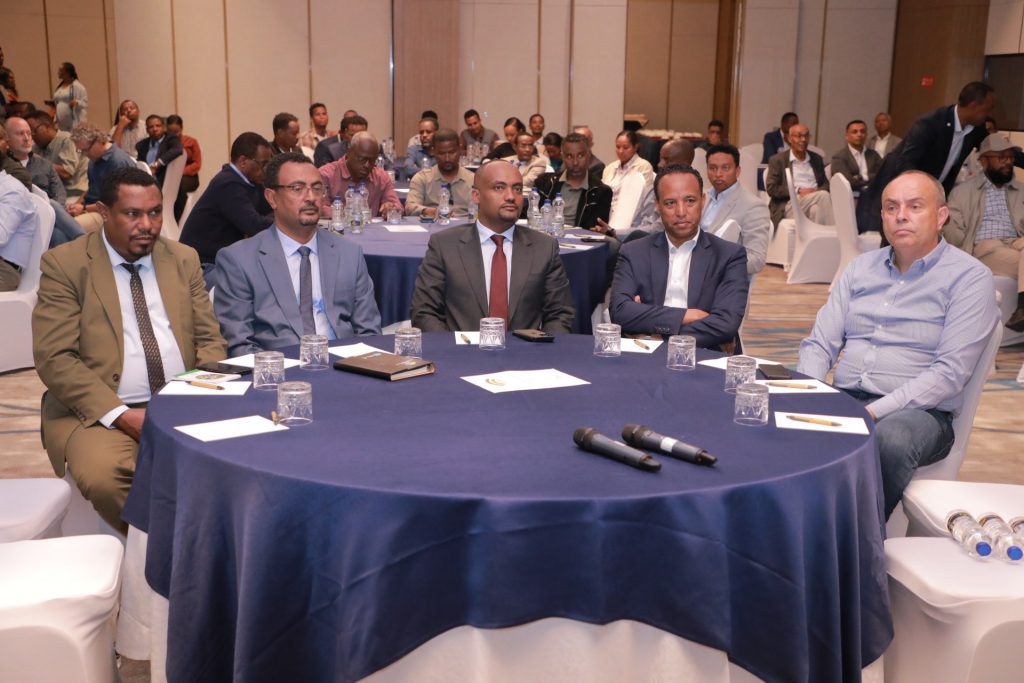
In a bid to fast-track the growth of Ethiopia’s horticulture industry, the Ethiopian Horticulture Producer Exporters Association (EHPEA), together with the Ministry of Agriculture, held a high-level consultative meeting to review the sector’s progress and chart the way forward. The session brought together key government officials, exporters, and development partners to identify practical steps for improving coordination, competitiveness, and export performance in what has become one of Ethiopia’s most dynamic industries, often described as the country’s “green gold.”
Bringing together a diverse group of high-level government officials, EHPEA member farms, key development partners, and sector experts, the meeting centered on tackling both policy and operational challenges that affect the export landscape for high-value crops. These include flowers, fruits, vegetables, herbs, cuttings, and seeds, underpinning Ethiopia’s rapid ascent as a major foreign exchange earner.

Opening the session, H.E. Addisu Arega, Minister of Agriculture, underlined the critical role of public-private collaboration in sustaining the sector’s upward trajectory. He outlined a government export target of $700 million USD for the current fiscal year, stressing that reaching this ambitious goal requires a systematic and unified effort to address bottlenecks and improve the overall business environment for exporters. The minister emphasized that coordinated action is indispensable for expanding market access and enhancing Ethiopia’s horticultural export competitiveness.
EHPEA Executive Director Tewodros Zewdie presented an in-depth sector review highlighting both challenges and growth opportunities. He called for immediate focus on priority areas such as:
- Improving access to finance and resolving long-term land lease concerns to stimulate investment.
- Enhancing operational efficiency by addressing electric power supply issues, ensuring timely availability of inputs, and advocating for duty-free privileges for seed companies.
- Advancing structural development through consolidation measures and strengthening out-grower schemes to better integrate smallholder farmers into the export value chain.
- Streamlining export logistics and customs processes to alleviate supply chain bottlenecks.
- Reinforcing international compliance by upholding phytosanitary and quality standards to maintain and broaden market access.
- Promoting sustainability and biosecurity measures, including coordinated national efforts to control destructive pests like the False Codling Moth.

The meeting fostered vibrant discussions where practical recommendations were shared to ensure ongoing transparent dialogue between the private sector and policymakers. Such engagement is regarded as essential to guarantee that policy decisions are rooted in the realities and needs of the industry.
In closing remarks, the Minister reaffirmed the government’s commitment to establishing a conducive policy and regulatory framework that supports export competitiveness. EHPEA Chairman Ato Nega Mequanent echoed this commitment, pledging the association’s steadfast support for aligning industry priorities with Ethiopia’s broader economic goals.
Together, the Ministry of Agriculture and EHPEA are steadfast in their mission to elevate Ethiopia’s status not only as a leading African horticultural exporter but also as a model for sustainable and inclusive agribusiness development on the continent.