
14: 05: 2026
France’s cut flower industry is mounting an ambitious comeback as it seeks to reclaim market share from imported blooms and strengthen domestic production in an increasingly competitive global market. Facing strong competition from major exporters such as the Netherlands, Kenya, and Ethiopia, the French ornamental horticulture sector is pursuing a bold strategy centred on innovation, sustainability, branding, and supply chain efficiency.
At the heart of this transformation is Valhor’s “Plan de souveraineté pour la filière fleurs coupées 2026”, a strategic roadmap designed to reduce France’s
dependence on imported flowers and revive local production. The target is clear: within the next decade, one in every five flowers sold in France should be grown domestically.
To achieve this, the French sector is focusing on four major pillars.
The first is professionalisation and digitalisation. Growers are investing in knowledge-sharing platforms, precision production tools, and data-driven forecasting systems to better align output with market demand. Digitalisation is helping producers make smarter decisions, reduce waste, and improve profitability.
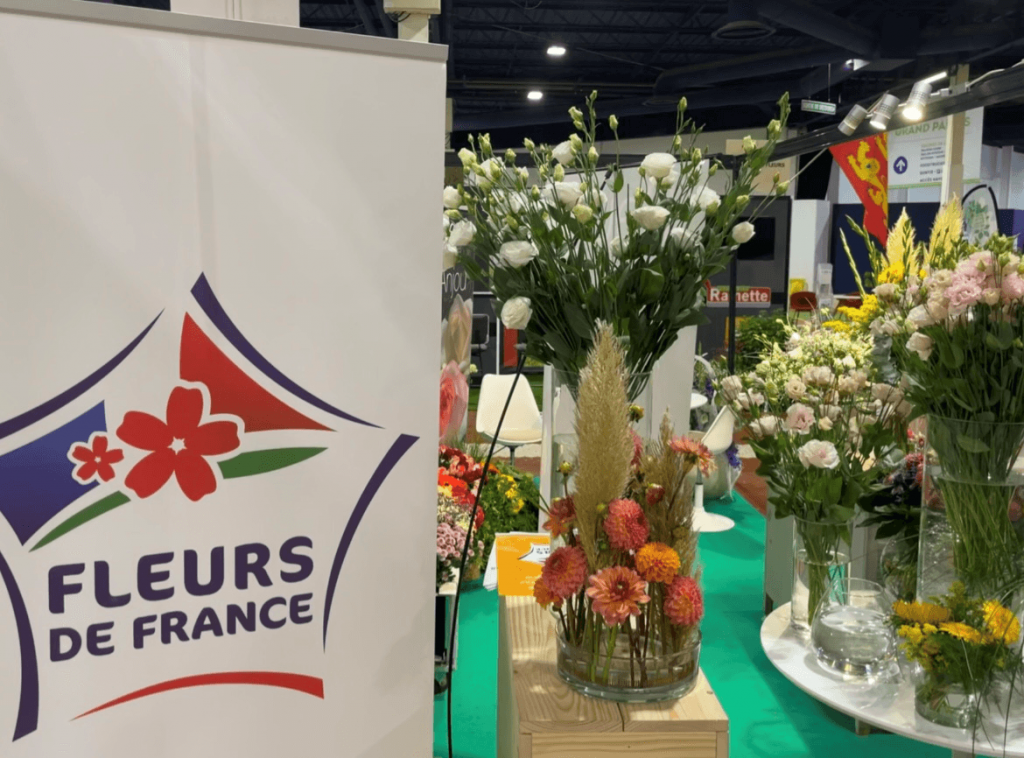
Secondly, France is strengthening quality assurance and origin branding through certification schemes such as Fleurs de France. This label guarantees locally grown flowers and is being promoted heavily to appeal to consumers increasingly interested in sustainability, traceability, and supporting domestic agriculture. The campaign positions French flowers as premium products with lower environmental footprints. The third pillar is logistics optimisation. French producers are working to shorten supply chains by improving transport coordination, standardising packaging formats, and consolidating distribution networks. This reduces costs while ensuring fresher flowers reach consumers faster
The fourth strategy is better market structuring. Through collective marketing and deeper market analysis, growers are identifying under-served seasonal niches and aligning production with consumer preferences. There is also a push for multicrop diversification, allowing producers to combine cut flower cultivation with vegetables and other high-value crops.
Research and innovation are playing a crucial role. Technical institute Astredhor is pioneering advances in soilless cultivation and closed-loop growing systems, which significantly cut water and fertiliser use while maintaining high flower quality. Trials show water savings of up to 26 percent and fertiliser reductions of nearly half.
France is also shifting toward seasonal, climate-appropriate flower production, focusing on crops such as ranunculus and anemones that can be grown with minimal heating. This reduces production costs and strengthens the sector’s environmental credentials.
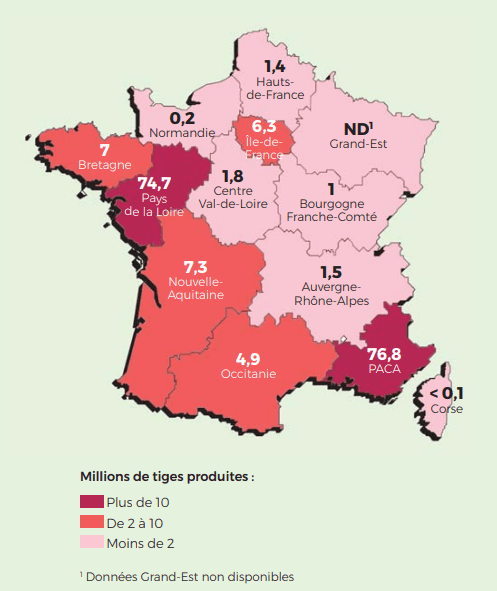
Regional production hubs like Provence-Alpes-Côte d’Azur and Pays de la Loire are leading the charge, combining traditional expertise with modern cultivation systems.
For France, competitiveness is no longer about matching low-cost imports. Instead, it is about carving out a premium niche built on local identity, sustainability, innovation, and quality—an approach that offers valuable lessons for flower-producing nations worldwide, including Kenya.