
30: 04: 2026
For Kenya’s flower sector, energy is no longer just an operational cost — it is a strategic determinant of global competitiveness.
As international buyers continue to tighten sustainability expectations while production costs remain under pressure, Kenya’s geothermal energy advantage is emerging as one of the strongest anchors for the country’s floriculture industry. Reliable, lower-cost and renewable power is helping shield growers from energy price volatility while strengthening Kenya’s positioning as a preferred sourcing destination for environmentally conscious markets.
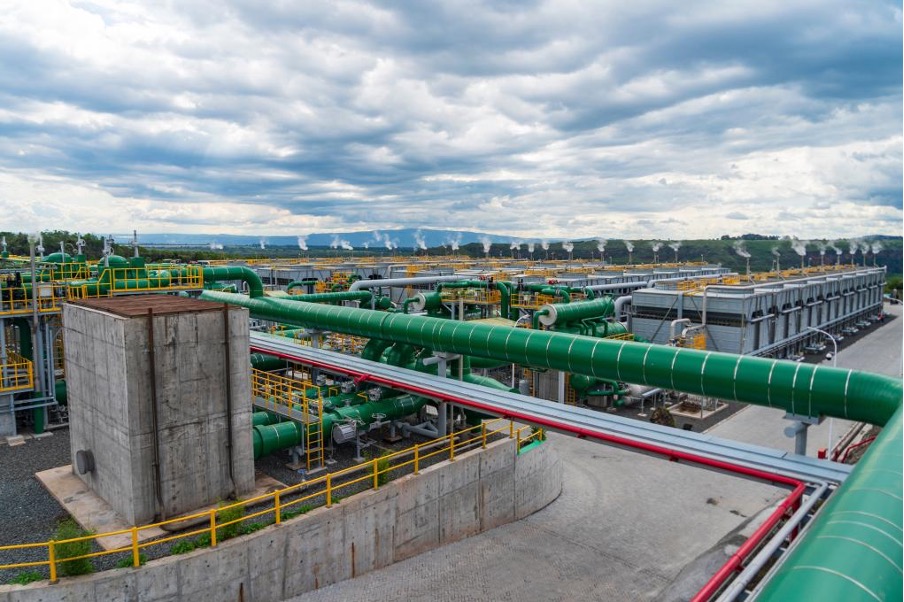
Data from Kenya’s Energy and Petroleum Regulatory Authority and the International Energy Agency show geothermal energy has consistently contributed between 40 and 48 percent of Kenya’s electricity generation in recent years, making it the country’s single largest source of power. Much of this comes from the vast Olkaria geothermal complex in Naivasha — right at the heart of Kenya’s flower-growing belt.
A Strategic Edge for Growers
Situated on the floor of the Great Rift Valley, Olkaria hosts one of the world’s most concentrated high-enthalpy geothermal reservoirs. Kenya’s geothermal potential is estimated at nearly 10,000 MW, yet less than half of this has been tapped.
For the flower industry, this untapped potential represents more than just future electricity supply. It offers a long-term hedge against rising production costs.
Once developed, geothermal plants operate with near-zero fuel costs. Kenya’s geothermal generation costs are estimated at between USD 0.07 and 0.08 per kilowatt-hour, significantly lower than heavy fuel oil-based generation, which can exceed USD 0.20 per kilowatt-hour.
This pricing differential matters deeply to floriculture businesses where electricity drives irrigation systems, cold chain infrastructure, packhouse operations and greenhouse climate control.
Unlike wind and solar, geothermal delivers dependable baseload power 24 hours a day, often exceeding 8,000 operating hours annually. During drought periods when hydropower generation drops, geothermal stabilizes the national grid — reducing the risk of outages and tariff spikes that can disrupt flower production and post-harvest logistics.
Beyond the Grid: Direct Benefits to Floriculture
Geothermal’s relevance to floriculture extends far beyond supplying electricity.
Near Lake Naivasha, One of the flower farms has become a global case study in renewable flower production by using geothermal well water to heat its operations, making it Kenya’s only fully renewable-powered flower farm.
This application has allowed the farm to significantly reduce carbon emissions while maintaining precise greenhouse temperatures essential for high-quality rose production.
The Geothermal Development Company (GDC) is also expanding direct-use geothermal applications across agriculture, including greenhouse heating, milk pasteurization and aquaculture.
For flower growers, wider access to geothermal heat presents opportunities to lower energy costs for propagation, improve climate control efficiency and enhance sustainability credentials increasingly demanded by European retailers.
Breaking New Ground
Kenya’s geothermal journey began in the 1950s, with the commissioning of Olkaria I in 1981 making Kenya the first African nation to generate electricity from geothermal energy.
Progress, however, was historically slow, constrained by high development costs and limited access to specialized geothermal technology dominated by a handful of Western and Japanese firms.
That landscape is changing.
New players are entering the sector with more cost-effective solutions, accelerating development timelines and expanding Kenya’s geothermal footprint.
One of the most notable recent entrants is Kaishan Group, whose projects at Menengai have introduced new competition and technological diversification into Kenya’s geothermal space.
The company’s Menengai developments have demonstrated faster plant delivery and operational efficiencies that could help unlock additional geothermal capacity at a lower capital cost.
For Kenya’s flower industry, this matters because greater geothermal capacity means stronger grid reliability and potentially more stable industrial power tariffs over the long term.
The Green Industrialization Link
Kenya’s geothermal expansion is increasingly being tied to the country’s broader green industrialization agenda.
Emerging geothermal-linked projects now extend beyond electricity into green hydrogen, ammonia and fertilizer production — sectors with direct implications for horticulture and floriculture input costs.
If successful, these developments could help reduce Kenya’s dependence on imported fertilizer, one of the most volatile cost centres for flower farms in recent years.
Lower fertilizer costs, combined with stable renewable power, would strengthen Kenya’s competitiveness against other flower-producing nations such as Ethiopia, Colombia and Ecuador.
Why This Matters for Export Markets
Sustainability is no longer optional in global floriculture.
European buyers are placing growing emphasis on carbon footprint reporting, renewable energy use and environmental accountability throughout the supply chain.
Kenya’s geothermal advantage gives its growers a compelling story to tell.
A flower stem produced using renewable geothermal energy carries a significantly lower carbon footprint than one grown using fossil-fuel-intensive systems elsewhere.
As carbon border adjustment mechanisms and retailer sustainability benchmarks become more stringent, this could become a major differentiator for Kenyan exporters.
The Opportunity Ahead
Kenya’s geothermal sector is not just powering homes and factories — it is quietly underwriting the competitiveness of one of the country’s most valuable export industries.
For flower growers, geothermal energy represents more than cheap electricity.
It is an enabler of operational resilience, sustainability compliance and long-term market relevance.
As investment continues to flow into Olkaria, Menengai and other geothermal fields, Kenya’s flower industry stands to benefit from one of the most strategic natural advantages any floriculture-producing nation can claim: abundant, renewable baseload energy growing directly beneath its farms.