
23: 04: 2026
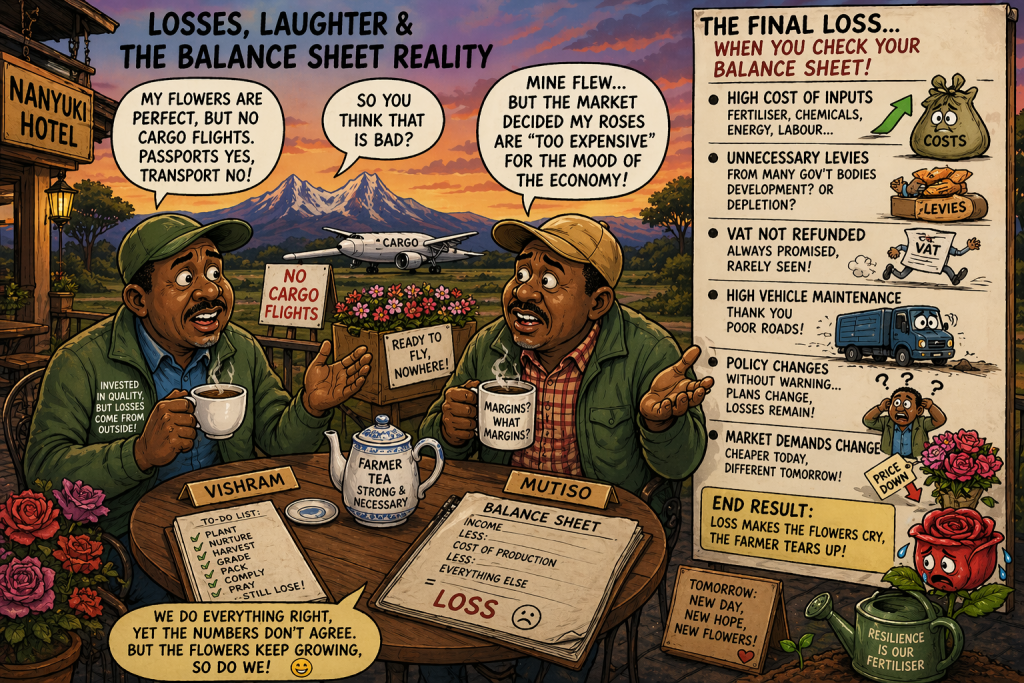
The evening air in Nanyuki carried a quiet chill, the kind that invites a slower conversation. Seated on the veranda of a modest hotel, cups of hot tea in hand, Vishram and Mutiso watched the sun dip behind Mount Kenya. It had been a long week, and like many in the floriculture sector, they had come with stories that were easier shared than solved.
“Vishram, you look like a man who has just harvested losses instead of roses,” Mutiso began, half smiling as he lifted his cup.
“At least you harvested,” Vishram replied. “Mine were ready, perfect stems, export grade… but no cargo flights. They are now locally famous and internationally unemployed.” He paused, then added dryly, “My flowers have passports, but no transport.”
Mutiso chuckled. “You think that is bad? Mine flew.” “That sounds like a happy ending.”
“They landed in a market that has suddenly developed budget consciousness,” Mutiso said. “Same buyers, same standards, but now they want premium flowers at discount prices. My margins didn’t just shrink, they disappeared politely.”
They both laughed, the kind of laughter that comes from recognition rather than amusement. In their different ways, they had arrived at the same destination: loss, not from poor farming, but from forces beyond the farm gate.
“We invest in everything,” Vishram continued. “Greenhouses, irrigation, cold chain, compliance. Then flights disappear, and suddenly I am running a five star flower hotel.”
“And I am supplying a luxury product to a discount market,” Mutiso added. “Maybe next we should grow plastic flowers. At least those don’t mind delays or price negotiations.”
A waiter passed by and refilled their tea. The warmth of the cup contrasted with the realities they were describing, but neither seemed surprised. These were not isolated incidents; they were becoming patterns.
“But you know,” Vishram said, stirring slowly, “the real loss is not even there.” Mutiso nodded. “Ah, you have checked the balance sheet.”
“That is where the real heartbreak lives,” Vishram went on. “High cost of inputs fertiliser, energy, labour all rising like they are chasing something. Then come the levies, some of them you pay before you even understand why.”
“And VAT refunds,” Mutiso added with a knowing look. “Always promised, rarely seen. On paper, you are owed money. In reality, you are financing the system.”
“Do not forget the roads,” Vishram said. “By the time my flowers reach the airport, the vehicle needs therapy. Maintenance costs are now part of the production plan.”
“So before the flowers even face the market,” Mutiso reflected, “they have already survived logistics, policy, and infrastructure. And sometimes they still lose.”
For a moment, they both fell silent, watching the last light fade over the mountain. Around them, the calm of the hotel stood in quiet contrast to the complexity of their trade.
“Strange thing,” Mutiso said at last, “we do everything right, and still the numbers argue with us.” Vishram nodded. “Which means the problem is not always on the farm.”
At least the tea offers that quiet but necessary reflection. As they rose to leave, the tea had cooled, but the resolve had not. “Tomorrow we go back and do it all again,” Mutiso said. “Of course,” Vishram replied. “The flowers are still growing.”
And in that simple truth lies both the challenge and the enduring hope of floriculture.