16-04-2026
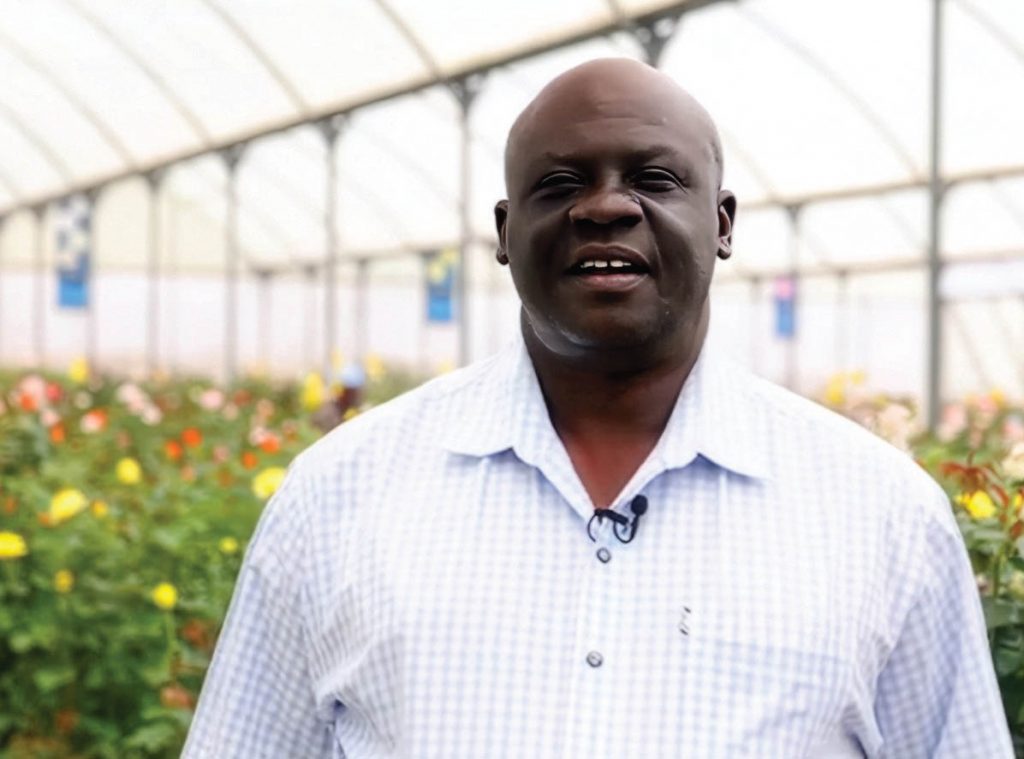
Frederick Okinda is part of the pioneering generation of African professionals who, in the early 2000s, helped transition Kenya’s floriculture industry from expatriate-led management to locally driven technical leadership. A graduate of Egerton University, his career spans rose production, breeding, propagation, consultancy, and agribusiness strategy. Known for translating greenhouse realities into boardroom decisions, he brings together agronomy, valuation, and data analytics with rare clarity.
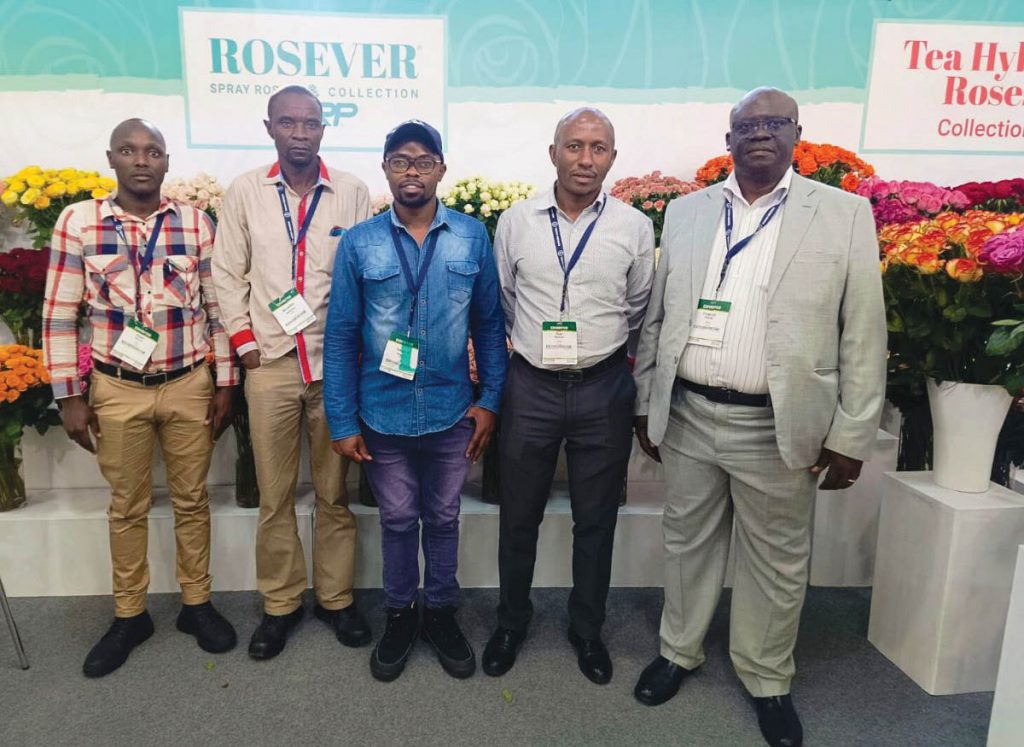
We first met early in our careers, at a time when ambition and uncertainty shaped our paths. At IFTEX 2025, we reconnected for a reflective conversation on leadership, technology, and the evolving demands of East African horticulture.
Q: Who is Frederick Okinda, and what are you currently doing?
A: I am an agribusiness and technical manager based in Kenya, currently working with NIRP International. I hold a BSc in Horticulture from Egerton University, and my career has evolved through technical management, propagation leadership, consultancy, and farm valuation.
My work sits at the intersection of agronomy and strategy. I design and oversee propagation systems, lead operational teams, advise boards on varietal selection, and prepare technical and valuation reports for commercial farms. Increasingly, I also leverage data analytics—using digital tools to support decision-making. At its core, my role is about aligning biological performance with market and investment realities.
Q: Your work sounds quite unique. What sets it apart?
A: The distinction lies in balancing science and strategy. Decisions made at propagation or varietal trial level directly influence export performance, compliance, and livelihoods. Few roles offer that level of impact across the value chain.
I also value the dual perspective—working in greenhouses one moment and presenting insights to boards the next. That connection keeps decisions grounded. Mentoring young agronomists and helping farms professionalise their systems adds long-term meaning to my work.
Q: Have you faced significant challenges along the way?
A: Certainly. One key challenge has been varietal inconsistency across environments. Varieties that perform well on paper can underdeliver due to microclimates or soil variation. I addressed this by developing structured evaluation frameworks combining field trials, historical data, and market analysis.
Managing expectations at board level—especially around biological timelines—has also been challenging. Data visualisation and scenario modelling have helped bridge that gap. On the people side, working with low-morale teams taught me the importance of culture, clear KPIs, and recognition. Each challenge reinforced the value of structure, communication, and continuous learning.
Q: How can the major threats facing the industry be addressed?
A: Climate variability, rising input costs, regulatory pressure, and skills shortages are major risks. Addressing them requires climate-resilient varieties, efficient irrigation, integrated pest management, and early regulatory intelligence.
Digitising compliance systems and benchmarking input efficiency can significantly reduce risk. On talent development, mentorship, farm-specific SOPs, and closer collaboration with universities are essential to building a sustainable skills pipeline.
Q: Has technology changed floriculture and agribusiness?
A: Absolutely. Technology has transformed both production and market access. E-commerce platforms now connect farms directly to buyers, offering real-time insights into demand and pricing. I’ve supported farms in adapting their varieties, documentation, and digital catalogues to these platforms.
Digital marketing has also shifted buyer preferences toward storytelling—sustainability, traceability, and authenticity now influence purchasing decisions. Internally, analytics tools like Power BI have improved how farms monitor performance and communicate results. Technology has accelerated decision-making, making adaptability a clear competitive advantage.
Q: Who inspires you professionally, and why?
A: I’ve had role models at every stage of my career, but Alessandro Ghione, CEO of NIRP International, stands out. His ability to align breeding science with global market trends is exceptional.
What resonates most is his collaborative approach—working closely with growers to ensure breeding success translates into commercial value. That integration of science, market awareness, and partnership reflects the leadership model I strive to emulate.
Q: Floriculture is a high-pressure industry. How do you manage?
A: Stress is inherent in agriculture. I manage it through structure—breaking problems into components, modelling outcomes, and focusing on controllable variables. Data provides clarity.
On a personal level, quiet reflection helps. Walking through propagation areas, listening to instrumental music, or reading creates balance. I also see challenges as learning opportunities; many of the solutions I use today were forged during difficult periods.
Q: What positive developments have you seen recently?
A: The growing global recognition of Kenyan floriculture is very encouraging. Seeing Kenyan farms prominently represented at international exhibitions like Myplant & Garden 2025 affirms the high technical standards achieved in the region.
Professionally, strengthening my valuation frameworks and advancing into business intelligence tools has been a significant step—expanding my impact from operations into strategic influence.
Q: Do you have a favourite flower?
A: The Inevitable® rose by NIRP International stands out. It combines strong agronomic performance with excellent market acceptance—large buds, stable colour, and long vase life.
Its consistency across environments reflects what I value most: reliability. Even the name resonates with my philosophy—progress achieved through persistence and sound systems.
Q: How do you typically spend your weekends?
A: Weekends are about rebalancing. Time with family, church, and quiet reflection helps me reset after intense weeks of planning and analysis.
Informal conversations with peers often spark ideas that feed back into my work. Sometimes, the best insights emerge away from spreadsheets and dashboards.