

By Staff Writer
Nearly two decades ago, a spirited global debate challenged a simple idea: that the environmental impact of flowers could be judged by how far they travel. At the time, Kenyan roses flown to Europe were defended as a greener alternative to blooms grown in heated European greenhouses. Today, the question remains relevant—but the answer is more nuanced.
Rethinking “Food Miles”
The original argument still holds weight. Measuring sustainability based solely on distance—so-called “food miles”—is now widely regarded as overly simplistic. Modern climate science instead focuses on lifecycle emissions, accounting for everything from production and inputs to transport and storage.
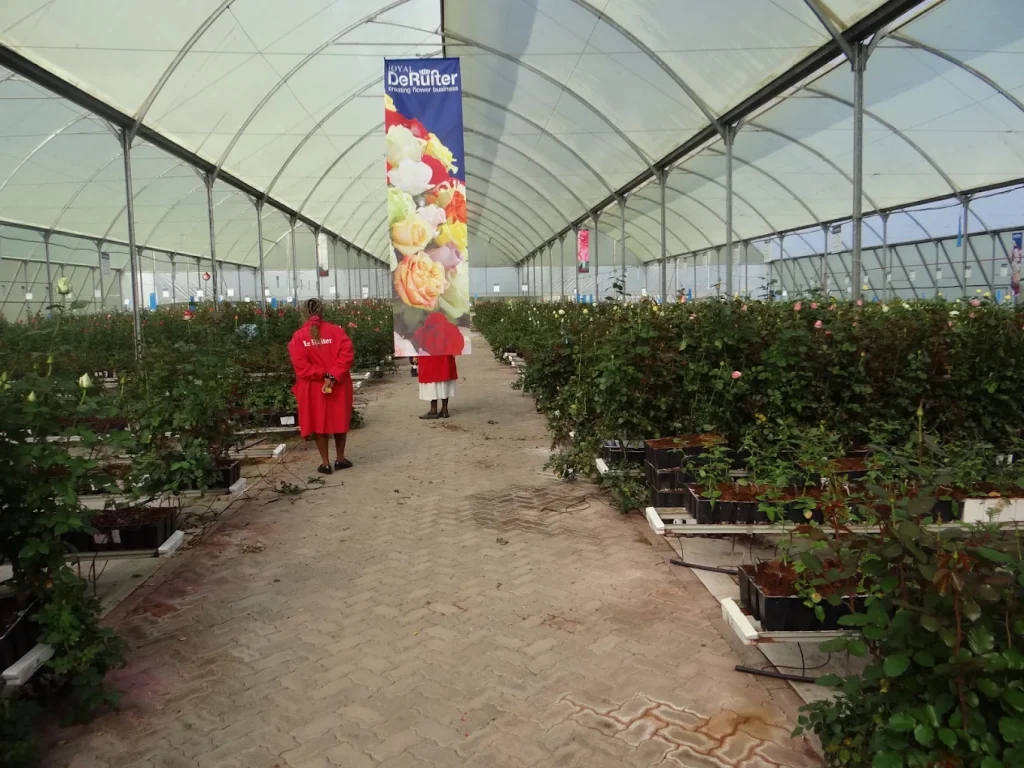
For cut flowers, this distinction is crucial. Kenya’s floriculture sector benefits from abundant sunlight and favourable growing conditions, reducing the need for artificial heating and lighting. In contrast, winter flower production in Europe has historically relied on energy-intensive greenhouse systems.
A Narrowing Carbon Gap
However, the gap between Kenyan and European production has narrowed significantly.
Countries such as the Netherlands have invested heavily in cleaner technologies, including geothermal heating, renewable energy, and energy-efficient LED lighting. These advances have reduced the carbon footprint of greenhouse-grown flowers.

At the same time, air freight—long a focal point of criticism—remains emissions-intensive per unit of cargo. While it still represents a relatively small share of total global emissions, it is increasingly scrutinised by regulators and retailers seeking to meet net-zero commitments.
The result is a more balanced equation: Kenyan flowers can still be competitive in carbon terms, but not automatically so. The overall footprint now depends on efficiency across the entire value chain.
Sustainability Moves to Centre Stage
Environmental concerns that were once emerging are now central to the industry. Around Lake Naivasha—the heart of Kenya’s flower sector—early warnings about water use and ecosystem pressure have driven significant change.
Today, many farms operate under strict sustainability standards, adopting:
• Water recycling and drip irrigation systems
• Integrated pest management (IPM)
• Reduced chemical usage
• Renewable energy solutions
Certification schemes such as Fairtrade, GlobalG.A.P., and Rainforest Alliance have become standard requirements for access to premium export markets.
These shifts reflect a broader transformation: sustainability is no longer optional—it is a market entry condition.
Economic Lifeline, Global Responsibility
Despite evolving environmental expectations, the economic importance of floriculture to Kenya remains immense. The sector generates over a billion dollars annually in export earnings and supports an estimated one to two million livelihoods directly and indirectly.
Europe continues to absorb the majority of exports, making it a critical partner. Increasingly, however, European buyers are demanding not just quality and consistency, but also verifiable sustainability credentials.
This creates a delicate balance. On one hand, there is pressure to reduce emissions and improve environmental performance. On the other, there is growing recognition of the role that trade plays in supporting livelihoods in developing economies.
From “Food Miles” to “Fair and Green Trade”
The debate has evolved beyond carbon alone. Today’s conversations centre on climate justice, ethical sourcing, and supply chain transparency.
Retailers are beginning to introduce carbon labelling and stricter environmental reporting requirements, while consumers are showing greater interest in how products are produced—not just where they come from.
For Kenyan exporters, this represents both a challenge and an opportunity.
The Road Ahead
Looking forward, several trends are shaping the competitiveness of Kenyan flowers:
• Carbon transparency: Product-level carbon footprints are becoming a reality in European retail
• Logistics efficiency: Optimised cargo, reduced waste, and improved cold chains are essential
• Sustainable aviation fuels (SAF): Though still emerging, these could help reduce air freight emissions
• Climate resilience: Water management and energy efficiency will be critical as climate variability increases
A Competitive Edge—With Conditions
So, are Kenyan air-freighted flowers still the greener choice?
The answer is: often, but not by default.
Kenya retains a natural advantage in climate and sunlight, allowing for lower-energy production. But maintaining that edge now depends on continuous improvement in sustainability practices, resource efficiency, and supply chain management.
What has not changed is the fundamental insight from the original debate: distance alone does not determine environmental impact. What matters is the full story—from farm to vase.
For Kenya’s floriculture industry, telling that story clearly, credibly, and consistently will be key to thriving in an increasingly climate-conscious global market.