
February 26, 2026
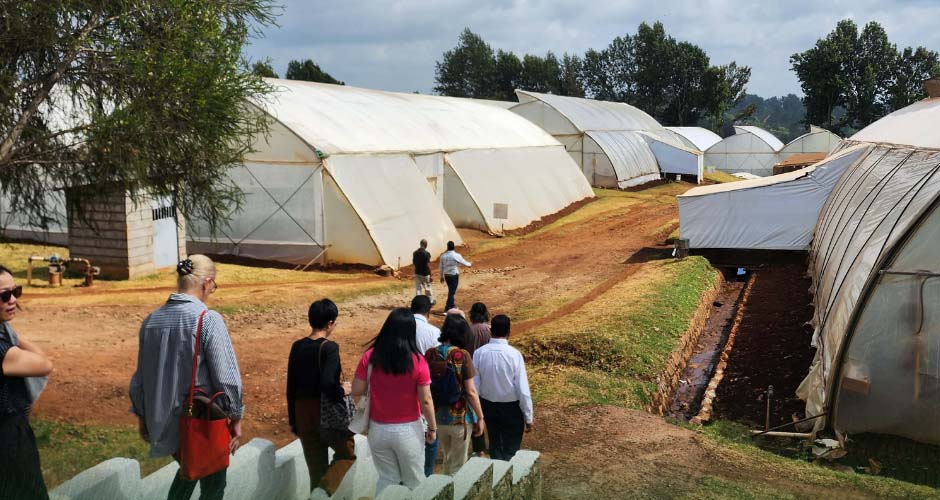
PHOTO COURTESY OF Embassy of the Philippines
The Philippines has stepped up its economic diplomacy in East Africa with a high-level visit to one of Kenya’s leading flower producers, signalling growing interest in the country’s globally competitive floriculture industry.
In mid-February 2026, Philippine Ambassador Marie Charlotte G. Tang toured flower farms in Limuru operated by Black Tulip Flowers LLC, gaining first-hand insight into Kenya’s export-driven cut-flower value chain. The visit formed part of a broader diplomatic engagement that brought together several Heads of Mission based in Nairobi, reflecting sustained international attention on Kenya’s flower sector.
Ambassador Tang, who is accredited to both Kenya and Ethiopia, joined envoys from Malaysia, China, Australia and Thailand in touring the greenhouses and packhouses of Black Petals Ltd. and Nelion Flora Ltd.. The two farms operate under Black Tulip’s Kenyan portfolio and form part of an integrated production network supplying global markets.
Inside the greenhouses, diplomats observed the full production cycle, from propagation and crop management to harvesting, grading and post-harvest handling. In the packhouses, flowers were sorted to precise market specifications before being prepared for air freight to destinations across Europe, the Middle East and Asia. The tour provided a practical overview of how Kenya has built a reputation for consistency and quality in one of the world’s most competitive agricultural export sectors.
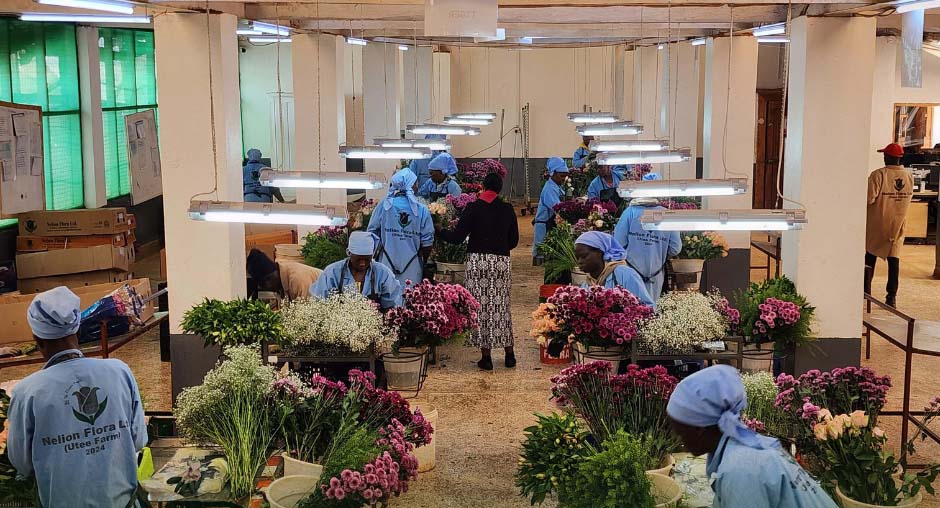
PHOTO COURTESY OF Embassy of the Philippines
Over the past two decades, Kenya has developed a tightly coordinated export system linking farms to cold-chain facilities and international cargo hubs, enabling flowers harvested in the morning to reach overseas auctions and retailers within days. The Philippines maintains a strong agricultural base but has yet to establish a floriculture export industry on the scale seen in Kenya. Ambassador Tang indicated that the tour was designed not simply as a courtesy call but as a fact-finding engagement aimed at identifying potential areas of cooperation and knowledge exchange between the two countries.
Kenya’s flower industry offers lessons in scale, market diversification and compliance with international standards. Exporters must meet strict phytosanitary requirements, adhere to evolving sustainability benchmarks and navigate volatile freight costs. Industry players have also had to adapt to shifting consumer preferences and emerging markets beyond traditional European destinations.
During discussions with farm management, members of the diplomatic delegation explored broader industry trends, including logistics pressures, input costs and the importance of maintaining quality assurance systems. The conversations reflected a shared understanding that floriculture is not merely about cultivation but about managing a sophisticated, time-sensitive supply chain.
The Philippines is seeking to diversify its trade portfolio and strengthen rural value chains, and Kenya’s floriculture model presents a possible reference point. While the sector remains relatively small in the Philippines, interest in high-value horticulture is growing, particularly in regions with favourable climates.
Beyond trade, the visit underscored the role of agriculture as a bridge for bilateral engagement. While the global demand for fresh-cut flowers continues to expand, especially in key consumer markets across Europe, North America and parts of Asia, Kenya’s established export infrastructure makes it an attractive partner for countries looking to build or refine similar industries.
The farm tour concluded with an exchange of views on future collaboration, including potential technical cooperation and industry linkages. Though no formal agreements were announced, the visit signaled intent: both sides recognize the strategic value of agribusiness in strengthening economic ties.