
February 26, 2026
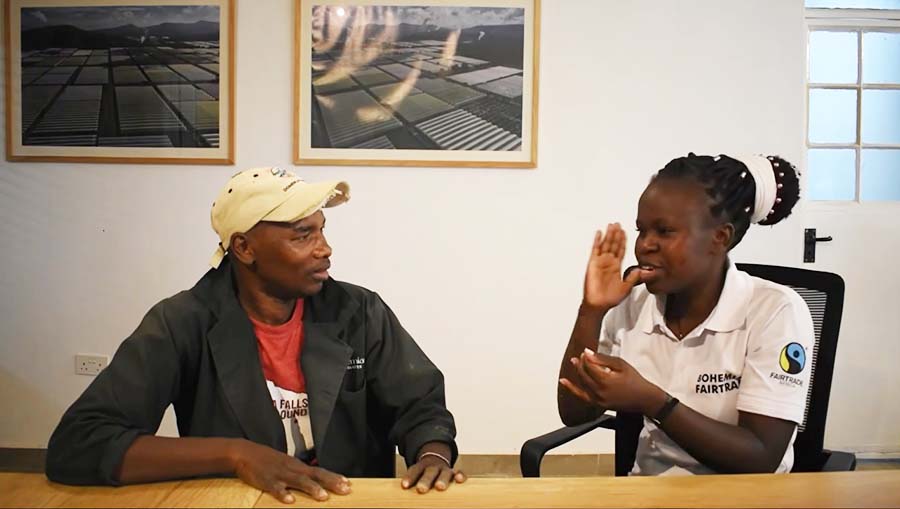
Charles Opayi Ombisi remembers the first day he joined Bohemian Flower Farm in Naivasha: he was the only deaf worker, surrounded by instructions he couldn’t hear and colleagues he couldn’t easily talk to. Today, he and 44 other deaf employees navigate the farm confidently, proving that when communication barriers are removed, inclusion can truly transform lives.
“When I joined, I was the only deaf person. Communication was almost impossible. Writing was the only way to communicate, but many of us didn’t know how to write properly,” he recalls. Misunderstood instructions, mistakes, and frustration were common. For many, silence was easier than attempting communication that seemed impossible.
Pauline Seda witnessed these challenges firsthand. “The deaf employees would hardly communicate because they felt left out. Most couldn’t write, so understanding instructions was very hard, and mistakes happened frequently,” she explains. The lack of accessible communication limited not just productivity but also confidence and engagement.
The turning point came when Pauline trained in Kenyan Sign Language at the University of Nairobi, supported by Fairtrade Premium. She returned to the farm not just with new skills but with a bridge between hearing and deaf employees. Her training opened the door to meaningful communication, allowing staff to fully engage in their roles and connect with supervisors and colleagues.
Today, the transformation is evident. Deaf employees actively participate in the Fairtrade Premium Committee, sharing their perspectives on important decisions. They participate in health and safety training, gender awareness programs, and sessions on mental well-being. Daily operations are no longer a source of frustration; they are an arena for contribution and leadership.
Francis Mutiso, responsible for bouquet production, highlights the impact. “When an order comes in, I rely on an interpreter to know the number of stems, types of flowers, and colors. I am deaf, but I am always one of the best workers on the team,” he shares. His experience reflects the wider change at the farm: talent was never the problem, but access was.
Lorin Kimunyu, Group Human Resources Manager at Bohemian, confirms the difference. “Our deaf employees are highly productive and have very few discipline issues. The improvement we’ve seen isn’t about ability; it’s about creating systems that remove barriers to communication.”
Bohemian Flower Farm’s approach demonstrates that inclusion is both ethical and strategic. By investing in communication access, the farm has not only empowered its employees but also strengthened operations, productivity, and workplace morale.
Bohemian Flowers shows that embracing diversity can be transformative. When barriers are removed, confidence grows, performance improves, and leadership emerges from unexpected places. Indeed, inclusion is not a checkbox but a standard, a practice, and a pathway to shared success.
SOURCE: Fairtrade Africa